AI-generated from sources
The enduring paradox: Why we tell ghost stories at Christmas
In Brief
- The Christmas ghost story is a cultural paradox, juxtaposing the season's cheer with macabre elements, traditionally shared around the protective glow of a fire.
- One interpretation, reinforced by Dickens, posits the ghost as a spiritual messenger, facilitating moral change and affirming the enduring presence of absent loved ones through love.
- A contrasting view dismisses the spiritual element, seeing the tradition as purely sensational entertainment fueled by humanity’s pleasure in experiencing 'vicarious horrors.'
- The ritual's power lies in its synthesis: by gathering to face tales of darkness, the participants affirm the safety, community, and humane warmth that define the Christmas season.
Main authors
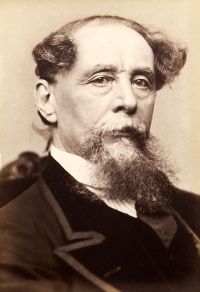


The pairing of Christmas, a season of light and cheer, with the chilling presence of the ghost story presents a curious cultural paradox [1]. It is a time defined by communal warmth, festive gatherings, and spiritual benevolence, yet it has become the traditional setting for tales of the supernatural and the macabre [2, 3]. The ritual is a familiar one: on a cold winter's night, with a fire blazing in the hearth, a company of people will inevitably turn to telling stories of specters and hauntings [4, 5]. This practice is so deeply ingrained that it has become a staple of the 'old-fashioned' Christmas, alongside carols and plum pudding [6, 7].
The setting itself seems to cultivate these narratives. The stark contrast between the roaring fire inside and the howling winds or silent, snowy landscapes outside creates a sanctuary of warmth and safety [8]. Within this protected circle, the telling of ghost stories becomes a way to confront the darkness from a position of security. The long passages of an old house or the gloom of a gothic gallery are seen as ideal stages for ghostly wanderings, but the tradition holds that any house can become a theater for such tales around the Christmas fire [9]. This creates a powerful dynamic where the comfort of the present is heightened by contemplating the mysteries of the unseen.
However, the fundamental purpose of this tradition remains a subject of debate. Does the Christmas ghost story serve a profound spiritual function, acting as a necessary counterpoint to the season's materialism by invoking the consoling presence of absent loved ones [10]? Or is it merely a sensationalistic indulgence, a festive dip into the pleasurable emotion of fear and a relic of 'by-gone times of ignorance and savagery' [11, 12]? The enduring link between the yuletide and the uncanny suggests a complex relationship that encompasses both spiritual longing and a taste for thrilling entertainment.
The Hearth as a Stage for the Haunting
The power of the Christmas ghost story is intrinsically linked to its environment. The tradition thrives on the juxtaposition of interior warmth against exterior cold, a sensory contrast that heightens the feeling of both comfort and suspense . As families and friends gather around the 'blazing fire,' shielded from the wintry world, a unique space is created for storytelling [13]. This act of huddling together against the elements fosters an atmosphere of intimacy and shared vulnerability, making it the perfect incubator for tales that explore the unknown [14]. The hearth becomes more than a source of heat; it transforms into the symbolic center of community, a focal point where the living draw close and share narratives that test the boundaries of their secure world .
This setting has become so codified that Christmas Eve is considered the ghosts' 'great gala night,' the one time of year when the spectral world holds its annual fete [15]. The expectation of a haunting is woven into the very fabric of the holiday, particularly at the stroke of midnight [16]. This connection is not a modern invention but part of a long heritage of 'old-fashioned' storytelling, a formula that often includes an old hall, a snowstorm, and a gathering of guests ready to share their supernatural experiences . The appearance of a ghost is an anticipated, almost required, element of the festivities, making the tradition a self-perpetuating ritual where the season itself seems to demand the presence of spirits [17, 18].
The Ghost as Spiritual Messenger
One interpretation posits that the Christmas ghost story fulfills a deep-seated spiritual need. Far from being a mere fright, the ghost can represent a profound connection to the past and to those who are no longer present. Christmas, being a time for family reunion, can make the absence of deceased loved ones feel particularly acute [19]. The supernatural tale thus becomes a vehicle for acknowledging their memory, transforming the specter into a symbol of love's endurance beyond death . In this view, the spiritual nature of human intercourse is reaffirmed, and the memory of the dead becomes a 'vital air' that sustains the living [20]. The apparition is not an intrusion but an invited guest, a consoling presence conjured by the season's focus on love and remembrance.
This moral and spiritual function of the ghost is perhaps best exemplified in the works of Charles Dickens [21]. In 'A Christmas Carol,' the spirits that visit Scrooge are not agents of terror for terror's sake; they are catalysts for redemption and profound personal change [22]. The Ghost of Jacob Marley explains that it is the duty of every person's spirit to 'walk abroad among his fellowmen,' and those who fail to do so in life are condemned to do so after death, witnessing a world they can no longer affect [23]. Dickens masterfully uses the ghostly framework to deliver a powerful lesson on empathy, charity, and the power individuals have to bring happiness to others [24]. His stated goal was not to frighten but to 'raise the Ghost of an Idea' that would 'haunt their houses pleasantly,' embedding a moral lesson within the entertaining form of a supernatural tale [25].
The Specter as Sensational Entertainment
An opposing perspective dismisses the spiritual significance of the Christmas ghost story, framing it instead as a form of popular, sensational entertainment. According to this view, the enduring popularity of the genre stems from a simple 'childish delight in the sensational' and the fact that humanity finds fear to be a pleasurable emotion when experienced vicariously . The ghost is less a spiritual messenger and more the 'real hero' of a thrilling narrative, captivating audiences with horror rather than moral insight. The tale becomes an end in itself, a way to pass the long winter nights with exciting, if baseless, stories .
Critics of the tradition often point to its formulaic and repetitive nature. Many ghost stories, particularly those told at Christmas, are seen as adhering to a predictable script, leading to a sense of weariness once the initial shock value fades [26]. Jerome K. Jerome satirizes this tendency, outlining the stock elements of the haunted chamber, the skeptic who dares to sleep in it, and the inevitable appearance of a lady in a night-dress [27, 28]. This reliance on old tropes can be seen as evidence that the genre is more about comfortable, ritualized entertainment than genuine spiritual exploration. Some writers even subvert the form entirely, creating humorous or satirical ghost stories that mock the conventions of the wraith, suggesting the form is ripe for parody rather than serious contemplation [29].
The freedom from realism that ghost stories afford is another key aspect of their appeal as entertainment [30]. In the supernatural world, there are no standards to curb the imagination, allowing for a type of narrative liberty not found in other fiction. The modern man, armed with science and philosophy, might publicly dismiss ghosts as superstition, yet still be privately spooked by a creaking door on a winter's night, revealing the enduring power of these 'baseless delusions' to captivate the imagination, even against one's better judgment [31].
The Christmas ghost story tradition cannot be neatly categorized as either a profound spiritual exercise or a frivolous, sensational pastime. Its enduring power lies precisely in its ability to occupy the space between these two poles. It draws on the elemental thrill of the unknown and our fascination with 'vicarious horrors' while simultaneously tapping into deeper seasonal themes of memory, connection, and moral reflection . The specter at the Christmas feast is both a source of entertainment and a potential messenger, its meaning shifting with the tone of the tale and the receptiveness of the audience.
Ultimately, the ritual of telling ghost stories reinforces the very community and warmth that define the Christmas season. By gathering together to share tales of the dark, participants affirm the light and safety of their own circle . The tradition, exemplified most enduringly by Dickens, harnesses the supernatural to deliver a fundamentally humane message about the importance of charity, forgiveness, and the bonds that connect us all . In this way, the ghost that haunts the Christmas fire does not undermine the season's cheer but paradoxically deepens it, reminding the living of the value of their warmth, their company, and the spiritual ties that bind them.


