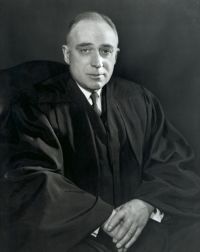
Arkansas Supreme Court; Annabelle Clinton Imber; Robert L. Brown; Ray Thornton

Biographical details

Arkansas Supreme Court; Annabelle Clinton Imber; Robert L. Brown; Ray Thornton Jegley v. Picado (2002)

By embarking upon a path of writing advisory opinions declaring statues unconstitutional in a response to a petition for declaratory judgment without requiring that a justiciable controversy be presented, we step away from our responsibilities in the judicial branch and act as a super-legislative body with an assumed authority to correct mistakes that the court from time to time may believe have been made by our General Assembly.
Source: Wikisource

Arkansas Supreme Court; Annabelle Clinton Imber; Robert L. Brown; Ray Thornton Jegley v. Picado (2002)

With respect to regulation of morals, the police power should properly be exercised to protect each individual's right to be free from interference in defining and pursuing his own morality but not to enforce a majority morality on persons whose conduct does not harm others. "No harm to the secular interests of the community is involved in atypical sex practice in private between consenting adult partners."
Source: Wikisource

Arkansas Supreme Court; Annabelle Clinton Imber; Robert L. Brown; Ray Thornton Jegley v. Picado (2002)

Based upon its constitutional language and the state's tradition of recognizing and protecting individual rights, the Kentucky Supreme Court held that the state's sodomy law violated a state right to privacy, saying: " [I] t is not within the competency of government to invade the privacy of a citizen's life and to regulate his conduct in matters in which he alone is concerned, or to prohibit him any liberty the exercise of which will not directly injure society."
Source: Wikisource

Get perspective with Kwize: daily news enlightened by great literature