“ Men are drawn there, not by the mysteriousness of the Nile, or the mild beauties of orchards and palm-groves, of well-cultivated fields and gardens—no, nor by the loveliness of sunrises and sunsets, of moonlit skies and stars shining with many hues, but by the huge masses of the pyramids, by the colossal statues, the tall obelisks, the enormous temples, the deeply-excavated tombs, the mosques, the castles, and the palaces. The architecture of Egypt is its great glory. ”
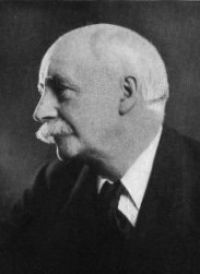
Arthur Gilman
Biographical details
Arthur Gilman, an American author and historian, is celebrated for his immersive narratives on ancient civilizations, notably in Ancient Egypt and The Story of Rome from the Earliest Times to the End of the Republic. His works emphasize the grandeur of architectural legacies, the dramatic tensions of historical conflict, and the enduring resonance of cultural memory.
Through vivid depictions of pyramids, Roman conquests, and the cyclical rise and decay of empires, Gilman underscores humanity’s interplay with power, ambition, and legacy, offering readers a lens to grasp the monumental scale of the past. His texts remain vital for their meticulous synthesis of history and imagination.
Quotes by Arthur Gilman
Arthur Gilman, The Story of Rome from the Earliest Times to the End of the Republic
“ He called upon the crowd the while, as it swayed to and fro in its threatening violence, to listen to reason, but at the same time told them that if he possessed the eloquence of a Brutus he would ruffle up their spirits and put a tongue in every wound of Cæsar that would move the very stones of Rome to rise in mutiny. He said that if the people could but hear the last will of the dictator, they would dip their kerchiefs in his blood—yea, beg a hair of him for memory, and, dying, mention it in their wills as a rich legacy to their children. ”
“ There stands the Great King, four times repeated, silent, majestic, superhuman—with features marked by profound repose and tranquillity, touched perhaps with a little scorn, looking out eternally on the grey-white Nubian waste, which stretches far away to a dim and distant horizon. Here, as you sit on the deep pure sand, you seem to see the monarch, who did so much, who reigned so long, who covered, not only Egypt, but Nubia and Ethiopia with his memorials. ”
“ Ramesses portrays this flight and carnage in the most graphic way. The slain enemy strew the ground, as he advances over them with his prancing steeds and in his rattling war-car, plying them moreover with his arrows as they vainly seek to escape. His chariot force and his infantry have their share in the pursuit, and with sword, or spear, or javelin, strike down alike the resisting and the unresisting. No one seeks to take a prisoner. It is a day of vengeance and of down-treading, of fury allowed to do its worst, of a people drunk with passion that has cast off all self-restraint. ”
Arthur Gilman, The Story of Rome from the Earliest Times to the End of the Republic
“ I was filled with painful emotions of shame as I just now made my way into the forum through the midst of a body of women. Will you consent to give the reins to their intractable nature and their uncontrolled passions? The moment they had arrived at equality with you, they will have become your superiors. What motive that common decency will allow is pretended for this female insurrection? Why, that they may shine in gold and purple; that they may ride through our city in chariots triumphing over abrogated law; that there may be no bounds to waste and luxury! ”
“ The war-steeds quivered in all their limbs, and burned to trample the nations under their feet. I myself was like the god Mentu, the warlike; I placed myself at their head, and they saw the achievements of my hands. I, Ramesses the king, behaved as a hero who knows his worth, and who stretches out his arm over his people in the day of combat. The invaders of my territory will gather no more harvests upon the earth, their life is counted to them as eternity. ”
Arthur Gilman, The Story of Rome from the Earliest Times to the End of the Republic
“ He rode in his chariot through the streets, the rejoicing inhabitants spreading tables in front of their houses, laden with meat and drink for the soldiers. The defeated chiefs walked before the victor, and after them followed the standards that had been won, while still farther behind were the soldiers, bearing the rich spoils. It was customary in those days for a conqueror to take every thing from the poor people whom he had vanquished,—homes, lands, cattle, wealth of every sort,—and then even to carry the men, women, and children away into slavery themselves. ”
Arthur Gilman, The Story of Rome from the Earliest Times to the End of the Republic
“ It was at the foot of a fig-tree that Romulus and Remus were fabled to have been found by Faustulus, and that tree was always looked upon with special veneration, though whenever the Roman walked through the woods he felt that he was surrounded by the world of gods, and that such a leafy shade was a proper place to consecrate as a temple. A temple was not an edifice in those simple days, but merely a place separated and set apart to religious uses by a solemn act of dedication. ”
“ Memphis, Heliopolis, Tanis, Saïs, Mendes, Bubastis, Heracleopolis, Hermopolis; Crocodilopolis, had been taken and retaken repeatedly; the old buildings and monuments had been allowed to fall into decay; no king had been firmly enough established on his throne to undertake the erection of any but insignificant new ones. Egypt was "fallen, fallen, fallen—fallen from her high estate;" an apathy, not unlike the stillness of death, brooded over her; literature was silent, art extinct; hope of recovery can scarcely have lingered in many bosoms. ”
Arthur Gilman, The Story of Rome from the Earliest Times to the End of the Republic
“ When the emigrants reached the Janiculum, and saw the hills and the modest temples of Rome before them, an eagle, symbol of royalty, flew down, and gently stooping, took off Lucomo's cap. Then, after having flown around the chariot with loud screams, it replaced it, and was soon lost again in the blue heavens. It was as though it had been sent by the gods to encourage the strangers to expect good fortune in their new home. Tanaquil, who was well versed in the augury of her countrymen, embraced her husband ”
“ Of all the forms of nature worship this was the most natural, and in the old world it was widely spread. Men adored the orb of day as the grandest object which nature presented to them, as the great quickener of all things upon the earth, the cause of germination and growth, of fruitage and harvest, the dispenser to man of ten thousand blessings, the sustainer of his life and health and happiness. With some the worship was purely and wholly material—the sun was viewed as a huge mass of fiery matter, uninformed by any animate life, unintelligent, impersonal ”
“ Flushed with his victories in this quarter, and intoxicated with the delight of conquest, Thothmes, on his return to Thebes, raised his thoughts to a still grander and more adventurous enterprize. Egypt had a great wrong to avenge, a huge disgrace to wipe out. She had been Invaded, conquered, plundered, by an enemy whom she had not provoked by any aggression; she had seen her cities laid in ashes, her temples torn down and demolished, the images of her gods broken to pieces, her soil dyed with her children's blood; she had been trampled under the iron heel of the conqueror for centuries ”
Arthur Gilman, The Story of Rome from the Earliest Times to the End of the Republic
“ It was a tedious and almost hopeless task to rebuild the broken-down city, and the people began to look with longing to the strongly-built houses and temples still standing at Veii, wondering why they might not go thither in a body and live in comfort, instead of digging among ashes to rebuild a city simply to give Camillus, of whom they quickly began to be jealous, the honor that had been an attribute of Romulus only. ”
“ Thus, after nearly a century and a half of repose, Egypt appeared once more in Western Asia as a conquering power, desirious of establishing an empire. The political edifice raised with so much trouble by David, and watched over with such care by Solomon, had been shaken to its base by the rebellion of Jeroboam; it was shattered beyond all hope of recovery by Shishak. Never more would the fair fabric of an Israelite empire rear itself up before the eyes of men; never more would Jerusalem be the capital of a State as extensive as Assyria or Babylonia, and as populous as Egypt. ”
Arthur Gilman, The Story of Rome from the Earliest Times to the End of the Republic
“ When Marius retired, the authority of the senate was restored, but the state was in a deplorable condition, for the violence and bloodshed that had been familiar for the half century since the triumph over Greece and Carthage, were bearing their legitimate fruits. Not only was the separation between the rich and poor constantly growing greater, but the effect of the luxury and license of the wealthy was debauching the public conscience, and faith was everywhere falling away. ”
“ Egypt is at all seasons a strange country, but presents the most astonishing appearance at the period of the inundation. At that time not only is the lengthy valley from Assouan to Cairo laid under water, but the Delta itself becomes one vast lake, interspersed with islands, which stud its surface here and there at intervals, and which reminded Herodotus of "the islands of the Ægean." The elevations, which are the work of man, are crowned for the most part with the white walls of towns and villages sparkling in the sunlight, and sometimes glassed in the flood beneath them. ”
Arthur Gilman, The Story of Rome from the Earliest Times to the End of the Republic
“ The citizen of Rome was practical, patriotic, and faithful to obligation; he loved to be governed by inflexible law; and it was a fundamental principle with him that the individual should be subordinate to the state. His kings were either organizers, like Numa and Ancus Marcius, or warriors, like Romulus and Tullus Hostilius; they either made laws, like Servius, or they enforced them with the despotism of Tarquinius Superbus. It is difficult for us to conceive of such a majestic power emanating from a territory so insignificant. ”
“ The greatest of the works of Ramesses are of a different description, and are indicative of that inordinate vanity which is the leading feature of his character. They are colossal images of himself. Four of these, each seventy feet in height, form the façade of the marvellous rock-temple of Ipsambul—"the finest of its class known to exist anywhere"—and constitute one of the most impressive sights which the world has to offer. ”
Arthur Gilman, The Story of Rome from the Earliest Times to the End of the Republic
“ For years the Mediterranean Sea had been infested by daring pirates, who at last made it unsafe for a Roman noble even to drive to his sea- side villa, or a merchant to venture abroad for purposes of trade. Cities had been ravaged, and the enemies of Rome had from time to time made alliances with the marauders. The pirates dyed their sails with Tyrian purple, they inlaid their oars with silver, and they spread gold on their pennants, so rich had their booty made them. ”
Arthur Gilman, The Story of Rome from the Earliest Times to the End of the Republic
“ The spirited matrons of Rome were ever ready to bear their share of the public burdens, and though some thought this oppressive, but few murmurs escaped them as they read the Oppian law, as it was called, when it was passed, for the days were dark, and the shadow of the defeat at Cannæ was bowing down all hearts, and their brothers and parents and husbands were trembling, strong men that they were, at the threatening situation of the state. ”
“ The monumental temple of Medinet-Abou, near Thebes, is the Pantheon erected to the glory of this great Pharaoh. Every pylon, every gateway, every chamber, relates to us the exploits which he accomplished. Sculptured compositions of large dimensions represent his principal battles.There are times in the world's history when a restless spirit appears to seize on the populations of large tracts of country, and, without any clear cause that can be alleged, uneasy movements begin. Subdued mutterings are heard; a tremor goes through the nations, expectation of coming change stalks abroad ”
Arthur Gilman, The Story of Rome from the Earliest Times to the End of the Republic
“ Thus we have the origin of the Roman people. We see how the early traditions "mixed human things with things divine," as Livy said had been done to make the origin of the city more respectable; how Æneas, the far-back ancestor, was descended from Jupiter himself, and how he was a son of Venus, the goddess of love. How Romulus and Remus, the actual founders, were children of the god of war, and thus naturally fitted to be the builders of a nation that was to be strong and to conquer all known peoples on earth. ”
“ The fame of Amen-hotep the Third, the grandson of the great Thothmes, rests especially upon his Twin Colossi, the grandest, if not actually the largest, that the world has ever beheld. Imagine sitting figures, formed of a single solid block of sandstone, which have sat on for above three thousand years, mouldering gradually away under the influence of time and weather changes, yet which are still more than sixty feet high, and must originally, when they wore the tall crown of an Egyptian king, have reached very nearly the height of seventy feet! ”
Arthur Gilman, The Story of Rome from the Earliest Times to the End of the Republic
“ Shut in on all sides by stupendous cliffs, among which flow the inspiring waters of the Castalian Spring, thousands of feet above which frowns the summit of Parnassus, on which Deucalion is said to have landed after the deluge, this romantic valley makes a deep impression on the mind of the visitor, and it is not strange that at an age when signs and wonders were looked for in every direction, it should have become the home of a sibyl. ”
“ If a single one of the petty princes between whose rule Syria was divided could defeat and destroy the largest army that Egypt had ever brought into the field, what hope was there of victory over twenty or thirty of such chieftains? Henceforth, until the time of the great revolution brought about in Western Asia through the destruction of the Assyrian Empire by the Medes, the eyes of Egypt were averted from Asia, unless when attack threatened her. ”
Arthur Gilman, The Story of Rome from the Earliest Times to the End of the Republic
“ The city was sacked, and as Camillus looked on, he exclaimed: "What man's fortune was ever so great as mine?" A magnificent triumph was celebrated in Rome. Day after day the temples were crowded, and Camillus, hailed as a public benefactor, rode to the capitol in a chariot drawn by four white horses. The territory of the conquered city was divided among the patricians, but Camillus won their hatred after a time by calling upon them to give up a tenth part of their rich booty to found a temple to Apollo, in pursuance of his vow, which he claimed to have forgotten meanwhile. ”
“ The great river to which Egypt owes her being, is at once the source of all her blessings and her chiefest danger. Swelling with a uniformity, well calculated to call forth man's gratitude and admiration, almost from a fixed day in each year, and continuing to rise steadily for months, it gradually spreads over the lands, covering the entire soil with a fresh coating of the richest possible alluvium, and thus securing to the country a perpetual and inexhaustible fertility. ”
Arthur Gilman, The Story of Rome from the Earliest Times to the End of the Republic
“ There were baths, and cellars for the wine and for the confinement of the slaves who might have to be chained.Varro thus describes life at a rural household: "Manius summons his people to rise with the sun, and in person conducts them to the scene of their daily work. The youths make their own bed, which labor renders soft to them, and supply themselves with water-pot and lamp. Their drink is the clear fresh spring; their fare, bread, with onions as a relish. Every thing prospers in house and field. The house is no work of art, but an architect might learn symmetry from it. ”
“ There is an entire absence of picturesque scenery. A single broad river, unbroken within the limits of Egypt even by a rapid, two flat strips of green plain at its side, two low lines of straight-topped hills beyond them, and a boundless open space where the river divides itself into half a dozen sluggish branches before reaching the sea, constitute Egypt, which is by nature a southern Holland—-"weary, stale, flat and unprofitable." ”
Arthur Gilman, The Story of Rome from the Earliest Times to the End of the Republic
“ Shall our children, and we ourselves, wear purple, and shall it be interdicted to our wives? Elegances of appearance and ornaments and dress are the women's badges of distinction; in them they delight and glory, and our ancestors called them the women's world. Still, they desire to be under control of those who are bound to them by the bonds of love, not by stern law, in these matters. The consul just now used invidious terms, calling this a female 'secession' as though our matrons were about to seize the Sacred Mount or the Aventine, as the plebeians did of yore ”
“ At dawn long streaks of rosy light stretch themselves across the eastern sky, the haze above the western horizon blushes a deep red; a ruddy light diffuses itself around, and makes walls and towers and minarets and cupolas to glow like fire; the long shadows thrown by each tree and building are purple or violet. A glamour is over the scene, which seems transfigured by an enchanter's wand ”
Arthur Gilman, The Story of Rome from the Earliest Times to the End of the Republic
“ He was quickly followed by Pompey, however, who encouraged Cicero to denounce the crimes of Verres with the success that we have already noticed. Cicero loftily exclaimed that he did not seek to chastise a single wicked man who had abused his authority as governor, but to extinguish and blot out all wickedness in all places, as the Roman people had long been demanding; but with all his eloquence he was not able to make the people appreciate the fact that the interests of Rome were identical with the well-being and prosperity of her allies, distant or near at hand. ”
“ In a short time the strongholds that resisted were taken, the male population put to the sword, the women and children enslaved, the houses burnt, the temples ruthlessly demolished. An iconoclastic spirit possessed the conquerors. The gods and worship of Egypt were hateful to them. Where-ever the flood passed, it swept away the existing civilization, deeply impregnated as it was with religion; it covered the ground with the débris of temples and shrines, with the fragments of statues and sphinxes ”
Arthur Gilman, The Story of Rome from the Earliest Times to the End of the Republic
“ He reflected that Cæsar had won distinction in Gaul, and Pompey by overcoming the pirates and conquering the East, and determined to show his skill as a warrior in his new province, Parthia. There was no cause for war against the people of that distant land, but a cause might easily be found, or a war begun without one, the great object aimed at being the extension of the sovereignty of Rome, and marking the name of Crassus high on the pillar of fame. ”
“ Then it would be recognized that there lay before the travellers the fields and gardens and palaces and obelisks of Egypt, the broad flood and rich plain of the Nile, and their hearts would leap with joy, and lift themselves up in thanksgiving to the Most High, who had brought them through the great and terrible wilderness to a land of plenty. ”
Arthur Gilman, The Story of Rome from the Earliest Times to the End of the Republic
“ It was in the year four hundred and ninety-five, B.C., that a poor, but brave debtor, one who had been at the very front in the wars, broke out of his prison, and while the wind flaunted his rags in the face of the populace, clanked his chains and told the story of his calamities so effectually in words of natural eloquence, that the commons were aroused to madness, and resolved at last to make a vigorous effort and seek redress for their wrongs in a way that could not be resisted. ”