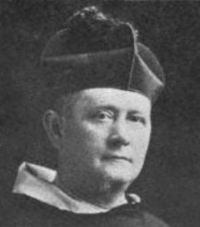
Edward Mewburn Walker

Biographical details

Edward Mewburn Walker,  1911 Encyclopædia Britannica, Volume 20… (1911)

“ The history of the confederacy of Olynthus illustrates at once the strength and the weakness of that movement towards federation which is one of the most marked features of the later stages of Greek history. The strength of the movement is shown both by the duration and by the extent of the Chalcidic League. It lasted for something like seventy years; it survived defeat and temporary dissolution, and it embraced upwards of thirty cities. Yet, in the end, the centrifugal forces proved stronger than the centripetal; the sentiment of autonomy stronger than the sentiment of union. ”
Source: Wikisource

Edward Mewburn Walker,  1911 Encyclopædia Britannica, Volume 7… (1911)

“ Occasionally he compares, criticizes or combines; as a rule he adheres closely to the writer whom he is using. There is no evidence, either of independent inquiry, or of the utilization of other sources than literary ones. Where “original documents” are quoted, or referred to, as e.g. in the history of the Four Hundred, or of the Thirty, it is probable that he derived them from a previous writer. For the authority of Aristotle we must substitute, therefore, the authority of his sources; i.e. the value of any particular statement will vary with the character of the source from which it comes. ”
Source: Wikisource

Get perspective with Kwize: daily news enlightened by great literature