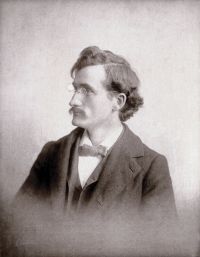
Fearing Burr

Biographical details

Fearing Burr,  The Field and Garden Vegetables of America

“ Soil, Propagation, and Culture.—The best soil for the Cardoon is a light and deep but not over-rich loam. It is raised from seed; which, as the plant is used in the first year of its growth and is liable to be injured by the winter, should be sown annually, although the Cardoon is really a perennial. It succeeds best when sown where the plants are to remain; for, if removed, the plants recover slowly, are more liable to run to seed, and, besides, seldom attain the size of those that have not been transplanted. ”
Source: Gutenberg

Fearing Burr,  The Field and Garden Vegetables of America

“ All the species and varieties of Tobacco in common cultivation are annuals; and most, if not all, are natives of this continent. "Like other annual plants, it may be grown in almost every country and climate, because every country has a summer; and that is the season of life for all annual plants. In hot, dry, and short summers, like the northern summers of Europe or America, Tobacco-plants will not attain a large size; but the Tobacco produced will be of delicate quality and good flavor. ”
Source: Gutenberg

Fearing Burr,  The Field and Garden Vegetables of America

“ In its manner of growth, foliage, flowering, and in the odor and taste of the ripened fruit, it strongly resembles the musk-melon. The fruit is slender and flexuous; frequently measures more than three feet in length; and is often gracefully coiled or folded in a serpent-like form. The skin is green; the flesh, while the fruit is forming, is greenish-white,—at maturity, yellow; the seeds are yellowish-white, oval, flattened, often twisted or contorted like those of some varieties of melons, and retain their vitality five years. ”
Source: Gutenberg

Get perspective with Kwize: daily news enlightened by great literature