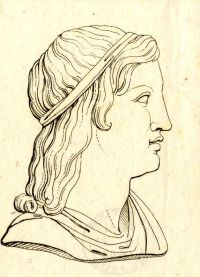
Gaius Suetonius Tranquillus

Biographical details

Portrait of Gaius Suetonius Tranquillus Gaius Suetonius Tranquillus The Lives of the Twelve Caesars

And it fell out that as he was offering sacrifice in a public temple after his arrival in the province, the hair of a young attendant who was carrying an incense-box suddenly turned white all over his head, and there were some who did not hesitate to interpret this as a sign of a change of rulers and of the succession of an old man to a young one; that is to say, of Galba to Nero. Not long after this lightning struck a lake of Cantabria and twelve axes were found there, an unmistakable token of supreme power.
Source: Wikisource

Portrait of Gaius Suetonius Tranquillus Gaius Suetonius Tranquillus The Lives of the Twelve Caesars…

Many of the soldiers who were present kissed his hands and feet as he lay dead, weeping bitterly and calling him the bravest of men and an incomparable emperor, and then at once slew themselves beside his bier. Many of those who were absent too, on receiving the news attacked and killed one another from sheer grief. In short the greater part of those who had hated him most bitterly while he lived lauded him to the skies when he was dead; and it was even commonly declared that he had put an end to Galba, not so much for the sake of ruling, as of restoring the republic and liberty.
Source: Wikisource

Portrait of Gaius Suetonius Tranquillus Gaius Suetonius Tranquillus The Lives of the Twelve Caesars…

Indeed, when certain men tried to trace the origin of the Flavian family to the founders of Reate and a companion of Hercules whose tomb still stands on the Via Salaria, he laughed at them for their pains. So far was he from a desire for pomp and show, that on the day of his triumph, he did not hesitate to say: "It serves me right for being such a fool as to want a triumph in mythology old age, as if it were due to my ancestors or had ever been among my own ambitions."
Source: Wikisource

Get perspective with Kwize: daily news enlightened by great literature