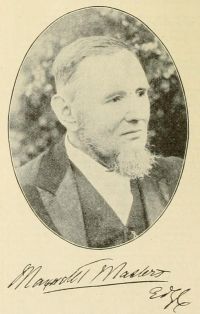
H. S. Coe

Biographical details

H. S. Coe,  Sweet Clover: Growing the Crop

“ The most serious objection to seeding sweet clover in the spring without a nurse crop is weeds. In many sections of the country seeds will take as much water from the soil and make as much or more shade than a crop of grain. In spite of the fact that sweet clover will withstand more adverse conditions than red clover or alfalfa, a heavy growth of weeds will greatly retard the growth of the plants and in some cases kill most of them. ”
Source: Gutenberg

H. S. Coe,  Sweet Clover: Growing the Crop

“ Sweet clover, like all legumes, has the power to extract nitrogen from the atmosphere, and on account of its extensive root system it is able to obtain phosphorus and potassium from a larger area than most plants. The large roots not only add a quantity of humus and nitrogen to the soil but they also open it up to a considerable depth, thus providing better aeration and improving its physical condition. Improved physical condition causes the bacterial flora to increase and thereby indirectly causes a larger quantity of unavailable phosphorus and potassium to be made available for plant use. ”
Source: Gutenberg

H. S. Coe,  Sweet Clover: Harvesting and Thrashing the Seed Crop

“ If the crop is not cut until the seed pods on the uppermost branches have matured, most of the pods on the lower branches will have shattered.
It is the practice in regions where a grain header is employed to permit the plants to become somewhat more mature before cutting the seed crop than in sections where other machines are used. More seed is shattered when the plants are cut at the latter stage, but this is not necessarily a loss, as the grain header is employed for the most part in semiarid regions, where the shattered seed is depended upon to reseed the land.
”
Source: Gutenberg

Get perspective with Kwize: daily news enlightened by great literature