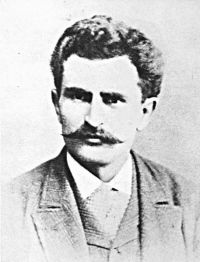
John Austin

Biographical details

John Austin,  Centralization (1847)

“ It appears, therefore, that where a government is really centralized, it governs by maxims which are good in themselves, and which are also consecrated by a formidable public opinion. But since constitutional securities for good government rest immediately on the same moral power, those maxims are equivalent, in no inconsiderable degree, to these more formal guarantees; insomuch, that a government which is not popular in form, but which is really or effectually centralized, will be administered in the spirit of governments which are popular in form and substance. ”
Source: Wikisource

John Austin,  Centralization (1847)

“ The aggregate of the several states, as represented by such a convention, is, therefore, sovereign throughout the Union. The federal government, which is its creature and minister, and the states' governments, whose powers it can modify at its pleasure, are equally subordinate to it. But though this aggregate, as thus represented, is properly a sovereign body, its active functions are merely constituent. It defines the constitution and attributes of the federal government, and thus modifies (by implication) the powers of the states' governments. ”
Source: Wikisource

John Austin,  Centralization (1847)

“ But, according to the same distinction, political liberty signifies political power: it means that part in the sovereign power, which, in a country popularly governed, is held by a member of the sovereign body. Hence civil liberty is opposed to political; and a look of paradoxical profundity is given to familiar truths, by virtue of a double meaning put upon a word. 'That a nation having political, may want civil liberty,' is a maxim which looks pregnant. ”
Source: Wikisource

Get perspective with Kwize: daily news enlightened by great literature