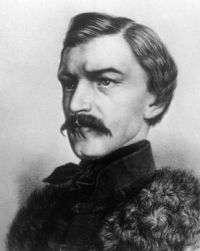
Karel Havlíček Borovský

Biographical details

Portrait of Karel Havlíček Borovský Karel Havlíček Borovský The Conversion of St. Vladimir (1930)

Great religious ceremonials, with pomp and ostentatious pageants and processions, feasts and revels were prepared for them. Nothing was left undone to impress them with the grandeur and virtue of their religion.
They returned, a little worse for wear after their debauch but well agreed that this was the only creed for their ruler to adopt—both for himself and his subjects. As they pictured to Vladimir the pomp and display, the glory and splendor, he was much impressed.
Source: Wikisource

Portrait of Karel Havlíček Borovský Karel Havlíček Borovský The Conversion of St. Vladimir (1930)

When one’s wife, in her fury
⁠Rails, as but women can,
’Tis sure to drive one frantic
⁠Be he god, or merely man.
Poor Perun, I have compassion
⁠For your sorry, wretched lot—
There awaits you on the morrow
⁠An extremely fiendish plot!
O Perun, unlucky creature,
⁠Without favor, dread or fear,
You have dared to show your hatred
⁠’Gainst your lord, Tsar Vladimir!
Oh, why did you not consider
⁠Poor, unfortunate Perun?
Flee, oh, flee—else if they get you
⁠Your career will end too soon!
↑ There the author spent four years as political prisoner.
Source: Wikisource

Portrait of Karel Havlíček Borovský Karel Havlíček Borovský The Conversion of St. Vladimir (1930)

Havlicek’s political aims and hopes were:
Liberal-mindedness, sane and honest politics, faith in progress and democracy, belief in political betterment, universal education, social reform and advancement of the masses. All of this had to be preceded by a revolution of the mind and the hearts of the people—since he believed in revolutionizing Bohemian thought by education rather than by force.
It is the opinion of Masaryk that Havlicek’s epic poem, “The Conversion of St. Vladimir,” was a rather radical exhibit of politico-religious satire, more bitter than some of his other writings.
Source: Wikisource

Get perspective with Kwize: daily news enlightened by great literature