“ To the city of Pyong-an gentry and officials gather as men crowd into a boat; I have seen so many, but for grace and ability no one was ever like Keydong. I must find him, and even though he casts me aside I never shall forget him. I have not kept myself even unto death as I should have, because I have been under the power and influence of the Governor. How could he ever have come so far for one so low and vile? He, a gentleman of the highest birth, for the sake of a wretched dancing-girl has endured all this hardship and come so far. ”
Pang Im
Biographical details

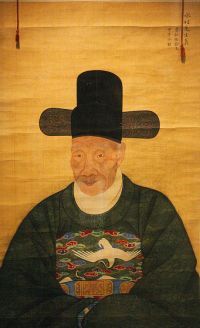
Pang Im (1640–1724), a Korean writer, is best known for his collection Korean Folk Tales, which explores themes of social hierarchy, moral ambiguity, and the interaction between human and supernatural realms. His narratives, rich in Confucian and Buddhist motifs, portray characters confronting power, virtue, and destiny, often merging realism with fantastical elements.
Through stories featuring officials, scholars, and mythical beings, Im critiques societal norms while underscoring personal integrity. His work remains a vital insight into 17th–18th century Korean cultural and ethical discourse, effortlessly blending allegory with real-life experiences.
Quotes by Pang Im
“ What do you do for a living? Tell me the truth now, and no dissembling.”The scholar, frightened to death, replied, “My clan name is So-and-so, and my given name is So-and-so. I am so old, and I have lived for several generations at Yon-nan, Whang-hai Province. I am stupid and ill-equipped by nature, so have not done anything special. I have heard all my life that if you say your beads with love and pity in your heart you will escape hell, and so have given my time to calling on the Buddha, and dispensing alms.” ”
“ The young man had seen the Royal Palace frequently when in Seoul attending examinations, but compared with this, the Royal Palace was as a mud hut thatched with straw.As he reached the gate a man in ceremonial robes received him and led him in. He passed two or three pavilions, and at last reached a special one and went up to the upper storey. There, reclining at a table, he saw the ancient sage whom he had met before. Again he bowed.This young man, brought up poorly in the country, was never accustomed to seeing or dealing with the great. In fear, he did not dare to lift his eyes. ”
