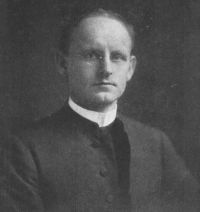
Stephen Langdon

Biographical details

Stephen Langdon,  Sumerian Liturgies and Psalms

“ Lines of similar character occur repeatedly in the laments of the mother goddess as she weeps for her people in the standard liturgies. In other words, the cult of the deified kings issues here into its logical result. The god man created to live and die for his people usurps the sphere of the earth mother herself. And like her he is intimately associated with the fortunes of mankind, of nature and all living creatures. The great gods and the hosts of their attendants rule over man and the various phases of the universe from afar. ”
Source: Gutenberg

Stephen Langdon,  Sumerian Liturgies and Psalms

“ But the liturgy here published resembles in literary style the classical lamentations which always formed the chief temple services of Sumer and Babylonia. It more especially resembles the weeping mother liturgies, but here Ishme-Dagan appears in the lines of the service in a rôle similar to that of the sorrowful mother goddess of the ordinary liturgies, as he weeps for Nippur.
“Her population like cattle of the fields within her have perished. Helas my land I sigh.”
”
Source: Gutenberg

Stephen Langdon,  The Epic of Gilgamish

“ The dynastic list preserved on a Nippur tablet1 mentions him as the fifth king of a legendary line of rulers at Erech, who succeeded the dynasty of Kish, a city in North Babylonia near the more famous but more recent city Babylon. The list at Erech contains the names of two well known Sumerian deities, Lugalbanda2 and Tammuz. The reign of the former is given at 1,200 years and that of Tammuz at 100 years. Gilgamish ruled 126 years. We have to do here with a confusion of myth and history in which the real facts are disengaged only by conjecture. ”
Source: Gutenberg

Get perspective with Kwize: daily news enlightened by great literature