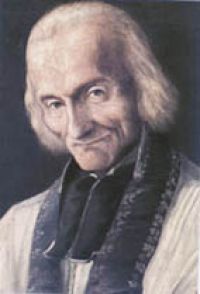
Thomas L. Kinkead

Biographical details

Thomas L. Kinkead Baltimore Catechism, No. 4

One who commits sin is a greater fool. He suspends himself, as I have told you once before, over an abyss of eternal torments on the slender thread of his own life, that may break at any moment. Do we tempt God and do to Him what we dare not to do to our fellowman because He is so merciful? Let us be careful. He is as just as He is merciful, and some sin will be our last, and then He will cut the thread of life and allow us to fall into an eternity of sufferings.
Source: Gutenberg

Thomas L. Kinkead Baltimore Catechism, No. 4

A mortal sin once committed remains on the soul till it is forgiven. Now, how could his mortal sin be forgiven? Not in the Sacrament of Penance, for the Protestant does not go to confession; and if he does, his minister—not being a true priest—has no power to forgive sins. Does he know that without confession it requires an act of perfect contrition to blot out mortal sin, and can he easily make such an act? What we call contrition is often only imperfect contrition—that is, sorrow for our sins because we fear their punishment in Hell or dread the loss of Heaven.
Source: Gutenberg

Thomas L. Kinkead Baltimore Catechism, No. 4

Now we should be just as careful to avoid a bad book as a bad man, and even more so; for while we read we can stop to think, and read over again, so that bad words read will often make more impression upon us than bad words spoken to us. You should avoid not only bad, but useless books. You could not waste all your time with an idle man without becoming like him—an idler. So if you waste your time on useless books, your knowledge will be just like the books—useless. Many authors write only for the sake of money, and care little whether their book is good or bad, provided it sells well.
Source: Gutenberg

Get perspective with Kwize: daily news enlightened by great literature