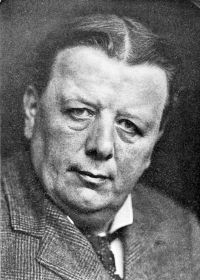
William Thomas Calman

Biographical details

William Thomas Calman,  1911 Encyclopædia Britannica (1911)

“ Many of the larger species of Crustacea are used as food by man, the most valuable being the lobster, which is caught in large quantities on both sides of the North Atlantic. Perhaps the most important of all Crustacea, however, with respect to the part which they play in the economy of nature, are the minute pelagic Copepoda, of which incalculable myriads form an important constituent of the “plankton” in all the seas of the globe. It is on the plankton that a great part of the higher animal life of the sea ultimately depends for food. ”
Source: Wikisource

William Thomas Calman,  1911 Encyclopædia Britannica (1911)

“ In those Copepods in which the palps of the mandibles as well as the antennae are biramous and natatory, the first three pairs of appendages retain throughout life, with little modification, the shape and function which they have in the nauplius stage, and must, in all likelihood, be regarded as approximating to those of the primitive Crustacea. In other respects, however, such as the absence of paired eyes and of a shell-fold, as well as in the characters of the post-oral limbs, the Copepoda are undoubtedly specialized. ”
Source: Wikisource

William Thomas Calman,  1911 Encyclopædia Britannica, Volume 7… (1911)

“ Most crabs live in the sea, and even the land-crabs, which are abundant in tropical countries, nearly all visit the sea occasionally and pass through their early stages in it. Many shore-crabs living between tide-marks are more or less amphibious, and the river-crab of southern Europe or Lenten crab (Potamon edule, better known as Thelphusa fluviatilis) is an example of the freshwater crabs which are abundant in most of the warmer regions of the world. ”
Source: Wikisource

Get perspective with Kwize: daily news enlightened by great literature