Summary

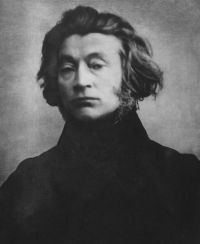
Portrait of Adam Mickiewicz Adam Mickiewicz Konrad Wallenrod: An Historical Poem

The foes have perished. Dost thou see these fires?
Thou see’st? ’Tis Litwa’s havoc with the Germans.
A hundred years heal not the Order’s wounds,
I smote the hundred-headed monster’s heart.
Their treasures wasted, well-springs of their power,
Their towns in flames, a sea of blood has flowed,—
I caused all this! I have fulfilled my vows!
More fearful vengeance hell might not conceive.
I will no more of it—I am a man!
I spent my youth in foul hypocrisy,
In bloody, murders. Now, bent down with age,
Wearied of treasons, I am unfit for war.
Enough of vengeance. Germans, too, are men!
Source: Gutenberg

Portrait of Adam Mickiewicz Adam Mickiewicz Konrad Wallenrod: An Historical Poem

Into the grave. Behold! they are conquered peoples,
Our brothers the Litwini! Son, this sand
Storm-driven from the sea, it is the Order.’
My heart did pain me hearing, and I longed
To murder all Crusaders, or to fly
To Litwa; but the old man checked my zeal.
‘To free knights,’ said he, ‘it is free to choose’
Their weapon, and with equal strength to fight
in open field. Thou art a slave; the only
Weapon that slaves may use is treachery.
Remain awhile and learn the Germans’ war-craft;
Try thou to gain their confidence
Source: Gutenberg

Portrait of Adam Mickiewicz Adam Mickiewicz Konrad Wallenrod: An Historical Poem

The Jagellons, and their more powerful vassals, became Poles; many Lithuanian princes adopted the Russian religion, language, and nationality. By these means the Grand Duchy of Lithuania ceased to be Lithuanian; the nation proper found itself within its former boundaries, its speech ceased to be the language of the court and nobility, and was only preserved among the common people. Litwa presents the singular spectacle of a people which disappeared in the immensity of its conquests, as a brook sinks after an excessive overflow, and flows in a narrower bed than before.
Source: Gutenberg

Get perspective with Kwize: daily news enlightened by great literature