“ The Saxon guard were overpowered, and a thousand tons of corn were brought, in triumph, into Marienburg. Some of it was sent on to the army, abundance being retained for the use of the town and garrison, in case of siege. ”
Marienburg
Definition and stakes
The theme of “Marienburg” has been addressed by authors such as G. A. Henty, Zacharias Topelius, Octavius Rooke, Bayard Taylor and Chautauqua Institution. It is often associated with terms like Prussia, Brandenburg, Marianne, Nuremberg and army.
Quotes about “Marienburg”
 Bayard Taylor,
A History of Germany from the Earliest Times to the Present Day
Bayard Taylor,
A History of Germany from the Earliest Times to the Present Day
“ The German Order, by this time, also possessed an independent realm, the capital of which was established at Marienburg, not far from Dantzic. The distance of the territory it had conquered in Eastern Prussia from the rest of the Empire, and the circumstance that it had also acknowledged itself a dependency of the Papal power, enabled its Grand Masters to say, openly: "If the Empire claims authority over us, we belong to the Pope; if the Pope claims any such authority, we belong to the Emperor." ”
 Zacharias Topelius,
The King's Ring
Zacharias Topelius,
The King's Ring
“ Beyond the town, in the direction of Schweinfurter, on the east bank of the river, appeared a troop of cavalry, from whose threatening but cautious advance one could easily recognise the vanguard of the Swedish army. "Accursed devils!" burst out the Jesuit, with an indescribable expression of hatred on his pallid face. "These heretics can fly. May the earth open and devour them!" And he ran out with frantic zeal to place himself at the head of the garrison. The bishop's castle, also called Marienburg, raises its old walls high above the right bank of the Main. ”
Chautauqua Institution, The Chautauquan, Vol. 04, October 1883
“ Marienburg is a place few foreigners find out, but Lübke, in his “History of Art,” represents the architecture of the palace occupied by the knights, or crusaders, for two centuries, as one of the most exquisite ruins in all Germany. Thorn and Königsburg were also homes for this order of knights.The following day at noon it was rather refreshing to drive into so modern and gay a place as Berlin, and forget that so many people must exist in places like Danzig. Mediæval life seems still to enwrap them there as in a garment. Their eyes are closed to any modern idea or project. ”
 Joseph McCabe,
The Romance of the Romanoffs
Joseph McCabe,
The Romance of the Romanoffs
“ It is generally believed that she was the daughter of a Livonian peasant, but she makes her first certain appearance as maid-of-all-work in the house of a poor German pastor. Profoundly ignorant, plain of feature, coarse in taste, this woman became in time the sole mistress of the Russian Empire. At the beginning of the Swedish war, in 1702, General Sheremetieff and the Russian forces besieged Marienburg. The Swedish commander threatened to blow up the fort rather than surrender, and the inhabitants fled to the Russian lines. ”
Octavius Rooke, The Life of the Moselle
“ At the end of the Marienburg promontory, round which we are now passing, is the village of Kaimt, and on the opposite shore stands the bright town of Zell.Zell is a flourishing place, extending along the bank of the river; its general aspect is cheerful and new, but here and there an old house with little quaint pinnacles reminds us of the age of the place. These little old houses seem squeezed into corners by the pretentious new-comers, whose elbows push into the ribs of the poor old fellows, until their timbers or ribs are bulged out by the pressure. ”
James W. Gerard, Face to Face with Kaiserism
“ But the German or rather the Prussian, has been moulded into the extraordinary person that he is to-day by a slow process of education extending through several generations. At Marienburg, on the Baltic shore of Germany, stands the ancient castle of the Teutonic Knights recently restored by the German Kaiser. The Knights at one time conquered and occupied much of the territory that is now modern Prussia. A military religious order, they attracted adventurers from all lands and their descendants constitute many of the noble families of Prussia. ”
 G. A. Henty,
The Lion of the North: A Tale of the Times of Gustavus Adolphus
G. A. Henty,
The Lion of the North: A Tale of the Times of Gustavus Adolphus
“ Immediately the place was taken, Colonel Sir John Hamilton advanced to Gustavus and resigned his commission on the spot; nor did the assurances of the king that he intended no insult to the Scotch soldiers mollify his wrath, and quitting the Swedish service he returned at once to Scotland. Munro's regiment had taken no part in the storming of Marienburg, but was formed up on the north side of the river in readiness to advance should the first attack be repelled, and many were wounded by the shot of the enemy while thus inactive. ”
Octavius Rooke, The Life of the Moselle
“ The village of Kaimt, from whose gardens the vine-wreaths sweep down just over our heads as we pass, was always unlucky; as the weaker in war go [183] to the wall, so, being close to the strong fort of Zell and the fortified cloister of Marienburg, Kaimt was generally burnt by one or other of the contending parties, and always plundered by both. Merl.Soon we reach Merl, where the Knight Carl of Zant lived, who loved the Pale Nun of Marienburg. Many other distinguished families lived in this town, which is very old, and full of quaint houses ”
Anne Topham, Memories of the Kaiser's Court
“ In 1309 the executive officers of this great order of fighting monks established themselves in the castle of Marienburg, a few miles beyond Elbing, which the Emperor has recently restored to its old glory, having entirely rebuilt it, as far as possible, in exact accordance with the former building, which had almost crumbled to decay.Cadinen often suffered from severe thunderstorms, which came on with great suddenness. One day, when for some reason we did not go to Kahlberg, the children and their teachers went in two open carriages for a long drive. ”
G. A. Henty,
The Lion of the North: A Tale of the Times of Gustavus Adolphus
“ They then turned its guns upon the gate of the keep, which they battered down, and were about to charge in when they received orders from the king to halt and retire, while the Swedish regiment of Axel-Lilly and the Blue Brigade advanced to the storm. The Scottish regiments retired in the deepest discontent, deeming themselves affronted by others being ordered to the post of honour after they had by their bravery cleared the way. The Swedish troops forced their way in after hard fighting; and the Castle of Marienburg, so long deemed impregnable, was captured after a few hours' fighting. ”
Zacharias Topelius,
The King's Ring
“ Her mother was Princess Würtemberg, related to the Electoral House of Bavaria, and her still living uncle, the Right Reverend Bishop of Würzburg, is lord of Marienburg, and the town of Würzburg, with all the lands belonging to it. You take advantage of us because your heretic king has taken our land and town, and made us prisoners; but the day will come when St. George and the Holy Virgin will descend and destroy you, you heathen; and if you harm a hair of our heads, this castle shall be levelled to the ground, and you, miserable witch, and your whole town, annihilated ... ”
Eva Annie Madden, Two Royal Foes
“ It was a city, and there was more to amuse one than in Memel. But life still had its troubles both for them, for the Queen, and for Prussia.One day Marianne was standing with the children on the bridge of Kantstrasse. They were looking down at the Fish Market and laughing at the fish women from the Baltic as they sold their fish. There were Dutch vessels in the Pregel, and queer sailors, and Marianne told the twins to look at the queer signs hanging on the houses on the bank. "When the Poles were here," she explained, "each man painted the sign of his trade and swung it from his house. ”
 Wilhelmine von Hillern,
The Hour Will Come: A Tale of an Alpine Cloister…
Wilhelmine von Hillern,
The Hour Will Come: A Tale of an Alpine Cloister…
“ They were two stricken souls flung together into a dark sea; for an instant they might cling to each other, and then, clasped in that embrace, must sink in the hopeless depths--but that one moment was worth a whole lifetime.Thus they went on to the little village of Saint Mary--the namesake of Marienberg. It was only three quarters of an hour from Münster, but he had to gather up all his strength to drag himself along; Beata felt with increasing anxiety how he gradually leaned more and more heavily on her shoulder, and how his power was failing. ”
Eva Annie Madden, Two Royal Foes
“ Never mind, Mariechen," for Marianne was beginning to cry out, "your idol is not entirely perfect. Now, when at last we have a literature in Germany, why will not our poets rouse our people? The imitation of France is on us like a curse. All must be French. We must speak French, we must read French, we must despise all things German. I tell you, Richard, it is now the calm before the storm. Over Prussia is gathering a cloud and the day will come when the sun shall shine no more for us." ”
Thomas Carlyle, History of Friedrich II of Prussia…
“ Brandenburg saw its towns sieged and sacked, its country populations driven to despair, by the one party and the other. Three times,—first in the Wallenstein Mecklenburg period, while fire and sword were the weapons, and again, twice over, in the ultimate stages of the struggle, when starvation had become the method—Brandenburg fell to be the principal theatre of conflict, where all forms of the dismal were at their height. ”
Thomas Carlyle, History of Friedrich II of Prussia…
“ Sure enough, some Markgraf must take charge of Brannibor,—he of the Lausitz eastward, for example, or he of Salzwedel westward:—that Brannibor, in time, will itself be found the fit place, and have its own Markgraf of Brandenburg; this, and what in the next nine centuries Brandenburg will grow to, Henry is far from surmising. Brandenburg is fairly captured across the frozen bogs, and has got a warden and ninth-man garrison settled in it: Brandenburg, like other things, will grow to what it can. ”
Wilhelmine von Hillern,
The Hour Will Come: A Tale of an Alpine Cloister…
“ His eyes were sunken, his cheeks pale with watching and prayer. For what prayer could indeed be strong, eager, and fervent enough to merit that grace of which no mortal is worthy, and least of all he--he the weak and erring novice who had scarcely mounted the first step towards perfection.The morning-sun streamed brightly down on the towers and pinnacles of Marienberg, and threw golden disks of light through the circular panes on to the pavement of the silent chapel. The penitent saw them not, it was still night to him, for he lay there with his face closely hidden in his clasped hands. ”
Eva Annie Madden, Two Royal Foes
“ Then Marianne told stories, also, of things she had heard of the Queen at Frau Rat Goethe's."Bettina Brentano," she began, "is a friend of the mother of our Goethe!""My goodness, Marianne!" cried Franz, who was home in those days, "don't pronounce that name as if it were sacred!"But Marianne paid no heed to him."Frau Rat," she continued, with a toss of her head, "loves our Queen with all her heart. She has known her since she was as old as Carl. Once, when she and her sister, the Princess Frederika, were little girls, they came to Frankfort to the coronation of the Emperor Leopold." ”
 William Fiddian Reddaway,
Frederick the Great and the Rise of Prussia
William Fiddian Reddaway,
Frederick the Great and the Rise of Prussia
“ A Calvinist prince ruled a Lutheran people, and the new Elector, George William (1619–1640) , “of Christ-mild memory” but the weakest of his line, proved to be a puppet in the hands of Schwarzenburg, his Romanist prime-minister. Under such guidance did Brandenburg, ill-knit and ill-armed, become the battle-ground between Swede and Hapsburg in their struggle for faith and empire.What Brandenburg suffered in the terrible decade 1630–1640, between the landing of Gustavus Adolphus in Germany and the accession of the Great Elector, can never be fully calculated. ”
L. Mühlbach, Louisa of Prussia and Her Times…
“ And now, Marianne, let us part. I do not promise that our meeting will be a joyful one, for I hardly count on any more joyful days, but I say that we will meet at the right hour. And the right hour will be for us only the hour when we shall have reached the goal of our secret league; when we shall have aroused the German people, and when they will rise like a courageous giant whom no one is able to withstand, and who will expel the invader with his hordes from the soil of Germany! ”
 Edward A. Freeman,
The Historical Geography of Europe…
Edward A. Freeman,
The Historical Geography of Europe…
“ The mark of Brandenburg, the mark against the Slave, has grown into the kingdom of Prussia, the Imperial state of Germany in its latest form. The Eastern mark, the mark against the Magyar, has grown into the archduchy which gave Germany so many kings, into the so-called Austrian ‘empire,’ into the Austro-Hungarian monarchy of our own day. ♦Analogies between Brandenburg and other marchlands.♦ The growth of Brandenburg or Prussia again affords an instructive comparison with the growth of Wessex in England, of France in Gaul, and of Castile in Spain. ”
 H. J. Fleure,
The peoples of Europe
(1922)
H. J. Fleure,
The peoples of Europe
(1922)
“ The system of the manor under which the villagers give service to a military protector is too easily mixed up with the village system in discussions. The manor, with complex origins, is characteristic of post-Roman days of movement and strife. The civilizing element promoting agriculture and the law is furnished by the Church, which, with the centuries, spread its work over the Rhine, beyond the bounds of the Empire, right away to the limits of Europe-of-the-Sea, that is of the lands near Baltic or Mediterranean, or west of a north-south line near the east ends of those seas. ”
 Adam Mickiewicz,
Konrad Wallenrod: An Historical Poem
Adam Mickiewicz,
Konrad Wallenrod: An Historical Poem
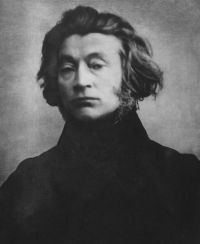
“ Marienbourg, in Polish Malborg, a fortified town, formerly the capital of the Teutonic Order, under Kazimir Jagellon (1444-1492) united to the Polish Republic; later on, given as a pledge to the Margraves of Brandenburgh. It came at last into the possession of the Kings of Prussia. In the vaults of the castle were the graves of the Grand-Masters, some of which are still preserved. (2) “But foreign houses of his fame were full.” Houses—so were called the convents, or rather castles, scattered through various parts of Europe. (3) “The strife of keen-edged swords” = combattre à outrance. ”
Thomas Carlyle, History of Friedrich II of Prussia…
“ Brandenburg not an exceptional case. No Prince stood up as beseemed: or only one, and he not a great one; Landgraf Wilhelm of Hessen, who, and his brave Widow after him, seemed always to know what hour it was. Wilhelm of Hessen all along;—and a few wild hands, Christian of Brunswick, Christian of Anhalt, Johann George of Jagerndorf, who stormed out tumultuously at first, but were soon blown away by the Tilly-Wallenstein TRADE-WINDS and regulated armaments:—the rest sat still, and tried all they could to keep out of harm's way. ”
Eva Annie Madden, Two Royal Foes
“ A peasant has become a captain, and what a captain! His weapon, prayer, and his ally, God. Oh, that the time of the Maid of Orleans might return that the enemy might be driven from the land!"It was about this time that Napoleon permitted Minister Hardenburg to return to his duties. At once affairs began to prosper."And the Queen," Marianne wrote to her mother, "is to take a journey. She is to go with the King and her children to all the places where she had lived as Crown Princess, to Paretz, to Oranienburg, and Peacock Island." ”
L. Mühlbach, Louisa of Prussia and Her Times…
“ I like to hear you talk in this strain,” exclaimed Marianne, joyfully. “I see you will represent us in Vienna in a noble and proud manner, and be an honor to the Jews of Berlin. Oh, I am so glad, Fanny, and I shall always love you for it. And do not forget me either. If it pleases God, I shall some day come to Vienna, and play there a brilliant part. However, we shall never be rivals, but always friends. ”
Stephen Marlowe, Tyrants of Time
“ Munich, Germany, city of commerce, transportation hub noisy with the sounds of arrival and departure, its byways crowded with small homburgs, bicycles, checkered caps. The Munich of the Beer Halls and great steins of hearty German beer and singing and raucous laughter. But also the Munich of unrest, distrust, intense intellectual turmoil, and the Munich which, not many months later, was to be the scene of the abortive putsch in a beer cellar which started a slight little man with stray-locked dark hair on his path toward world conquest. ”
The Great Events by Famous Historians…
“ But his resources were unequal to the demands made upon them, his enemy overwhelmed him with numbers, his own soldiers clamored for their pay long overdue, and there was no prospect of aid from without. There was nothing left, therefore, to him but to make the best terms he could. He adopted the somewhat singular plan of making over Marienberg and what remained of the dominions of the order to the chiefs who had given him aid, in payment for their services, and he himself, with his knights and troops, retired to Koenigsberg, which then became the capital of the order. ”
