Anhalt

Definition and stakes

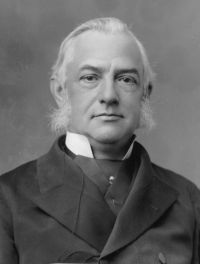
Portrait of F. Max Müller F. Max Müller,  Auld lang syne (1898)

“ If we go slowly back into the past, and that seems to me the real task of the historian, we shall find that there is no critical epoch in the history of Germany, and of the history of the world, where we do not meet with some of the princes of the small Duchy of Anhalt, standing in the very front of the fight. I only wonder that no one has yet attempted to write a popular history of the four principalities of Anhalt, in order to show the share which they took in the historical development of Germany. ”
Source: Gutenberg

Various,  Encyclopaedia Britannica, 11th Edition…

“ Esico's grandson, Otto the Rich, count of Ballenstedt, was the father of Albert the Bear, by whom Anhalt was united with the mark of Brandenburg. When Albert died in 1170, his son Bernard, who received the title of duke of Saxony in 1180, became count of Anhalt. Bernard died in 1212, and Anhalt, separated from Saxony, passed to his son Henry, who in 1218 took the title of prince and was the real founder of the house of Anhalt. On Henry's death in 1252 his three sons partitioned the principality and founded respectively the lines of Aschersleben, Bernburg and Zerbst. ”
Source: Gutenberg

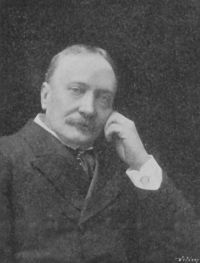
Portrait of F. Max Müller F. Max Müller,  Auld lang syne (1898)

“ If it has remained small and lost much of its former political influence, that is due chiefly to a law of inheritance which prevailed in the ducal family. Instead of making the eldest son the ruler of the whole duchy, it was the custom to divide the land among all the princes. Thus instead of one Duchy of Anhalt there were four duchies, Anhalt-Dessau, Anhalt-Cöthen, Anhalt-Zerbst, and Anhalt-Bernburg, some of them again subdivided. ”
Source: Gutenberg

Get perspective with Kwize: daily news enlightened by great literature