Summary

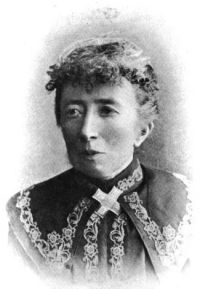
Portrait of Agnes Mary Clerke Agnes Mary Clerke 1911 Encyclopædia Britannica, Volume 11… (1911)

Discarding these obscure and misleading notions, Galileo taught that gravity and levity are relative terms, and that all bodies are heavy, even those which, like the air, are invisible; that motion is the result of force, instantaneous or continuous; that weight is a continuous force, attracting towards the centre of the earth; that, in a vacuum, all bodies would fall with equal velocities
Source: Wikisource

Portrait of Agnes Mary Clerke Agnes Mary Clerke 1911 Encyclopædia Britannica, Volume 11… (1911)

From the time of Archimedes there had existed a science of equilibrium, but the science of motion began with Galileo. It is not too much to say that the final triumph of the Copernican system was due in larger measure to his labours in this department than to his direct arguments in its favour. The problem of the heavens is essentially a mechanical one; and without the mechanical conceptions of the dependence of motion upon force which Galileo familiarized to men’s minds, that problem might have remained a sealed book even to the intelligence of Newton.
Source: Wikisource

Portrait of Agnes Mary Clerke Agnes Mary Clerke 1911 Encyclopædia Britannica, Volume 11… (1911)

He received every mark of private favour. The pope admitted him to six long audiences in the course of two months, wrote an enthusiastic letter to the grand-duke praising the great astronomer, not only for his distinguished learning, but also for his exemplary piety, and granted a pension to his son Vincenzio, which was afterwards transferred to himself, and paid, with some irregularities, to the end of his life. But on the subject of the decree of 1616, the revocation of which Galileo had hoped to obtain through his personal influence, he found him inexorable.
Source: Wikisource

Get perspective with Kwize: daily news enlightened by great literature