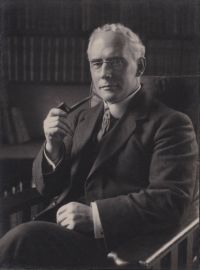
Albert Frederick Pollard

Albert Frederick Pollard

Summary

Portrait of Albert Frederick Pollard Albert Frederick Pollard 1911 Encyclopædia Britannica (1911)

By that time Cecil had begun to trim his sails to a different breeze. He was in secret communication with Elizabeth before Mary died, and from the first the new queen relied on Cecil as she relied on no one else. Her confidence was not misplaced; Cecil was exactly the kind of minister England then required. Personal experience had ripened his rare natural gift for avoiding dangers. It was no time for brilliant initiative or adventurous politics; the need was to avoid Scylla and Charybdis, and a via media had to be found in church and state, at home and abroad. Cecil was not a political genius
Source: Wikisource

Portrait of Albert Frederick Pollard Albert Frederick Pollard 1911 Encyclopædia Britannica (1911)

All factions sought to control his person, not because of his personality but because of his position; he was like the Great Seal, only more so, an indispensable adjunct to the wielder of authority. The Protector’s brother tried to bribe him with pocket-money; Northumberland was more subtle and established a complete dominion over his mind, and then put him forward at the age of fourteen as entitled to all the power of Henry VIII. But he was only Northumberland’s mask
Source: Wikisource

Portrait of Albert Frederick Pollard Albert Frederick Pollard 1911 Encyclopædia Britannica (1911)

With a maxim such as this, it was easy for him to maintain that Elizabeth’s coercive measures were political and not religious. To say that he was Machiavellian is meaningless, for every statesman is so more or less; especially in the 16th century men preferred efficiency to principle. On the other hand, principles are valueless without law and order; and Burghley’s craft and subtlety prepared a security in which principles might find some scope.
Source: Wikisource

Get perspective with Kwize: daily news enlightened by great literature