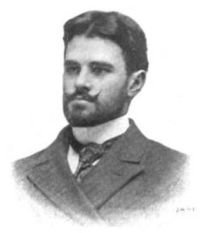
Albert Payson Terhune

Albert Payson Terhune

Summary

Portrait of Albert Payson Terhune Albert Payson Terhune The Girl in the Crowd (1917)

Nor could all of Karl’s repeated efforts bring Madeline back to the telephone.
Daisy Reynolds slumped forward upon the switchboard desk, her face in her hands, her slim body a-shake. She felt as though her every nerve had been wrenched. She was sick all over. This, then, was the wondrous romance in which she had reveled. This was the melancholy, beauteous love-story which had become part of her own colorless life! A vulgar intrigue between a married woman (not a wife, but a married woman—Daisy now realized the difference between the two) and a man not her husband!
Source: Gutenberg

Portrait of Albert Payson Terhune Albert Payson Terhune The Girl in the Crowd (1917)

It was dull and uninspiring and lonely in the dark cubby-hole, after the lights and the constant work and companionship of the Exchange. There was much more leisure, too, than at the Exchange.
Daisy at first tried to enliven this leisure by reading. She loved to read; book or magazine—it was all the same to Daisy, so long as the hero and heroine at last outwitted the villain and came together at the altar.
But there are drawbacks to reading all day—even to reading union-made love stories, by eight-candle-power light and with everlasting interruption from the switchboard.
Source: Gutenberg

Portrait of Albert Payson Terhune Albert Payson Terhune The Girl in the Crowd (1917)

To a girl cooped up alone all day in a stuffy cubby-hole, imagination is ten times stronger than to the girl whose thoughts can be distracted by outside things. To Daisy, immured in her dim-lighted cupboard behind the elevators, this romance of Karl and Madeline was fast becoming the very biggest thing in her drab life.
Source: Gutenberg

Get perspective with Kwize: daily news enlightened by great literature