Summary

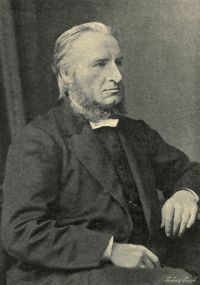
Portrait of Alexander Whyte Alexander Whyte,  Jacob Behmen: An Appreciation

“ For unless thou dost exercise thy heart, and the love of thy heart, upon every man in the world, thy self-love, thy pride, thy contempt, thy envy, thy distaste, thy dislike will still have dominion over thee. The Divine Nature will be quenched and extinguished in thee, till nothing but self and hell is left to thee. In the name, and in the strength of God, love all men. Love thy neighbour as thyself, and do to thy neighbour as thou doest to thyself. And do it now. For now is the accepted time; and now is the day of salvation!’
Jacob Behmen died in his fiftieth year.
”
Source: Gutenberg

Portrait of Alexander Whyte Alexander Whyte,  Jacob Behmen: An Appreciation

“ To write on the Incarnation of the Son of God would need, says Behmen, an angel’s pen; but his defence is that his is better than any angel’s pen, because it is the pen of a sinner’s love. The year 1621 saw one of Behmen’s most original and most powerful books finished,—the Signatura Rerum. In this remarkable book Behmen teaches us that all things have two worlds in which they live,—an inward world and an outward. All created things have an inner and an invisible essence, and an outer and a visible form. And the outward form is always more or less the key to the inward character. ”
Source: Gutenberg

Portrait of Alexander Whyte Alexander Whyte,  Jacob Behmen: An Appreciation

“ The immanence of God, as theologians and philosophers call it; the indwelling of God, as the psalmists and the apostles and the saints call it; the Divine Word lightening every man that comes into the world, as John has it,—of the practical and personal bearings of all that Behmen’s every book is full. Dost thou not see it and feel it? he continually calls to his readers. Heaven, be sure, is in every holy man, and hell in every bad man. When thou dost work together with God then thou art in heaven, and thy soul dwells in God. ”
Source: Gutenberg

Get perspective with Kwize: daily news enlightened by great literature