Summary

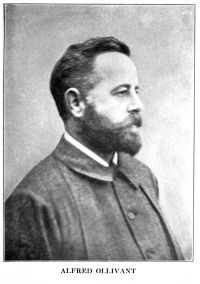
Portrait of Alfred Ollivant Alfred Ollivant One Woman: Being the Second Part of a Romance of Sussex

For the time being Ruth was glad to lie up, as a tigress in whelp, after long hunting, is content to harbour in the green darkness, drinking in draughts of refreshing through sleep, while her mate prowls out at dusk to find meat. But that would not last for ever. Her life must be full and brimming over or her insatiable vitality and that all-devouring spirit of hers, reaching out like a creeper to embrace the world, might find outlet in mischief, innocent enough in the intention, and yet, as experience had already proved, catastrophic in its consequences.
Source: Gutenberg

Portrait of Alfred Ollivant Alfred Ollivant One Woman: Being the Second Part of a Romance of Sussex

Habit was as much the motive of it as passion. It seemed to him the expression of an emotion once entirely genuine and now only partly so. An alloy had corrupted the once pure metal. He saw as clearly as a woman that Joe was no longer living simply for one purpose. Turgid his wife had once called the engineer. For the first time the Colonel realised the aptness of the epithet.
Then he noticed Ruth on the fringe of the crowd. He was surprised: for it was a long march from Old Town, and neither Ernie nor the children were with her.
Source: Gutenberg

Portrait of Alfred Ollivant Alfred Ollivant One Woman: Being the Second Part of a Romance of Sussex

And as she felt his approach, the savage power of him, his fierce virility, and was conscious of the reality of the danger, she resolved to meet it and fend it off. He should save Ernie instead of destroying her. And the way was clear. If this new intellectual life, the seeds of which the engineer had been sowing so patiently for so long in the unkempt garden of Ernie's spirit became a reality for him, a part of himself, growing in such strength as to strangle the weeds of carelessness, he was saved—so much Ruth saw.
Source: Gutenberg

Get perspective with Kwize: daily news enlightened by great literature