Summary

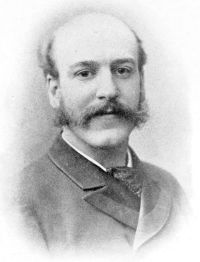
Portrait of Alfred Trübner Nutt Alfred Trübner Nutt Clan Traditions and Popular Tales of the Western Highlands and Islands (1895)

Islay may, at times, have pushed his theory of idiomatic fidelity too far, occasionally where he aims at a rendering he achieves a distortion, but as a whole the effect of strange, wild, archaic atmosphere and medium is given with unerring—one would call it skill, did one not feel that it is the outcome of a nature steeped in the Gaelic modes of conception and expression, and bold enough to invent the English requisite to give an adumbration of them.
Source: Gutenberg

Portrait of Alfred Trübner Nutt Alfred Trübner Nutt Clan Traditions and Popular Tales of the Western Highlands and Islands (1895)

She said she was a poor woman who was bringing herself through life honestly as she best could, with help from those who took notice of her poverty and gave her charity, and that she came to the nobles of the Clan Leod, as they were gathered at this time, to try if they would help her. “Let your countrymen do as they like,” Finlay said, “I will give you a calving cow (mart-laoigh) .” MacLean looked at him in astonishment, and it was no wonder, when he heard him give away the only cow the poor woman in Balemartin had to the northern wife (do ’n chaillich thuathaich) .
Source: Gutenberg

Portrait of Alfred Trübner Nutt Alfred Trübner Nutt Clan Traditions and Popular Tales of the Western Highlands and Islands (1895)

The difficulty of rendering Gaelic into English does not lie in the fact of its possessing a rude simplicity which the more sophisticated language is incapable of reproducing, but rather in that, whilst the emotions and conceptions are close to the primitive passions of nature in a degree that our civilisation has long forsworn, the mode of expression has the richness of colour and elaborate artificiality of a pattern in the Book of Kells.
Source: Gutenberg

Get perspective with Kwize: daily news enlightened by great literature