Summary

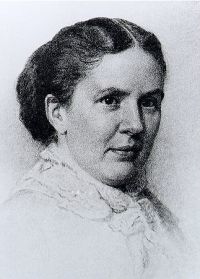
Portrait of Alice C. Fletcher Alice C. Fletcher Indian Games and Dances with Native Songs

All steps must be rhythmic and in time with the music. The seven leaders move steadily, also in time with the music, as they hold the cornstalks high, while the followers wave their scarfs or mantles and dance happily and lightly, but with dignity. The picture should be one of contrast as the procession takes its way among trees and through the sunny fields, the seven moving evenly, with the corn held high, and the joyous, fluttering group of dancers following.
The Life of the Corn culminates in a delight of color, movement and song.
Source: Gutenberg

Portrait of Alice C. Fletcher Alice C. Fletcher Indian Games and Dances with Native Songs

The natives of America thought of the cosmos as a unit that was throbbing with the same life-force of which they were conscious within themselves; a force that gave to the rocks and hills their stable, unchanging character; to every living thing on land or water the power of growth and of movement; to man the ability to think, to will and to bring to pass. This universal and permeating life-force was always thought of as sacred, powerful, like a god. To it a name was given that varied in the different languages; in the Omaha tongue it was called Wakon'da.
Source: Gutenberg

Portrait of Alice C. Fletcher Alice C. Fletcher Indian Games and Dances with Native Songs

At this time the leaders tie their wands to the trunk of the tree, but all the others retain their wands while they dance in these concentric circles. All should sing the dance-song, keeping time with the feet and waving the wands to the rhythm of the music. As the dance goes on, the time can be accelerated and the circles become wider and narrower, but in all these movements the rhythm of song and dance must never be broken—for the rhythm stands for the binding force of a common, social and loving life.
Source: Gutenberg

Get perspective with Kwize: daily news enlightened by great literature