“ We wait for Thy lovingkindness, O God: be merciful unto the children: O God, be merciful unto the children, for our soul trusteth in Thee, and we call unto the Most High God, even unto the God that shall perform the cause which we have in hand. For Thou hast looked down from Thy sanctuary; out of heaven did the Lord behold the earth, that He might hear the mournings of such as are in captivity, and deliver the children appointed to death. Arise, O God, maintain Thine own cause! Our hope is in Thee, Who helpeth them to right that suffer wrong. ”
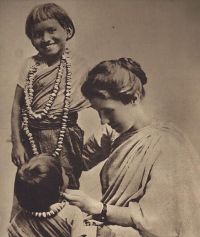
Amy Carmichael
Summary
Amy Carmichael’s Lotus Buds is a narrative that explores the lives of children in a missionary context, emphasizing their spiritual and social growth within a setting marked by cultural and religious conflict. Set in a Hindu community in Dohnavur, the text focuses on young characters such as Lulla, Bala, and Chellalu, whose challenges related to conversion, caste, and self-identity are interwoven with themes of prayer, care, and endurance.
Through rich depictions of nursery life and the difficulties of "rescuing" children from harsh environments, Carmichael examines the relationship between faith, kindness, and the vulnerability of childhood, ultimately offering a reflection on the ethical responsibility of guiding young hearts.
Quotes from Lotus Buds (Amy Carmichael)
“ This is exactly the view of one of our babies, already introduced, the little wise Lulla, who always knows her own mind and sticks to her intentions, unbeguiled by any blandishments.This baby is a tiny thing, with a round, small head, covered with soft, small curls; and this head is very full of thoughts. Her face, which she rarely shows to a stranger, is like a doll in its delicate daintiness; but the mouth is very resolute, and the eyes very grave. Her hands and feet are sea-shell things of a pretty pinky brown, and her ways are the ways of a sea-anemone in a pool among the rocks. ”
“ When Bala came to us first she was between one and two, an age when most babies have a good deal to say. Bala said nothing. She was like a book with all its leaves uncut; and some who saw her, forgetting that uncut books are sometimes interesting, concluded she was dull. "Quite a prosaic child," they said; but Bala did not care. There are some babies, like some grown-up people, who show all they have to show upon first acquaintance and to all. Others cover the depths within, and open only to their own. Bala is one of these; and even with her own she has seasons of reserve. ”
