Summary

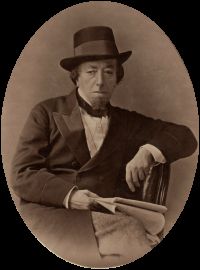
Portrait of Benjamin Disraeli Benjamin Disraeli Tancred — Chapter XLIII. Festivities in Canobia (1847)

GALLOPED up the winding steep of Canobia the Sheikh Said Djinblat, one of the most popular chieftains of the Druses; amiable and brave, trustworthy and soft-mannered. Four of his cousins rode after him: he came from his castle of Mooktara, which was not distant. He was in the prime of manhood, tall and lithe; enveloped in a burnous which shrouded his dark eye, his white turban, and his gold-embroidered vests; his long lance was couched in its rest, as he galloped up the winding steep of Canobia.
Source: Wikisource

Portrait of Benjamin Disraeli Benjamin Disraeli Tancred — Chapter XLIII. Festivities in Canobia (1847)

Many Sheikhs slowly rose; their followers rushed about; some looked at their musket locks, some poised their pikes and spears, some unsheathed their handjars, examined their edge, and then returned them to their sheath. Those who were in the interior of the castle came crowding into the great court, which, in turn, poured forth its current of population into the table-land about the castle. Here, held by grooms, or picketed, were many steeds. The mares of the Emir Fakredeen were led about by his black slaves. Many of the Sheikhs, mounted, prepared for the pastime that awaited them.
Source: Wikisource

Portrait of Benjamin Disraeli Benjamin Disraeli Tancred — Chapter XLIII. Festivities in Canobia (1847)

Bishop Nicodemus was kneeling in a corner and kissing a silver cross; and Hamood Abu-neked had rolled himself up in a carpet, and was snoring as if he were blowing through one of the horns of the Maronites. Fakredeen shot a glance at Tancred, instantly recognised. Then, rising and giving the salaam of peace to his guests, the Emir and his English friend made their escape down a corridor, at the bottom of which was one of the few doors that could be found in the castle of Canobia.
Source: Wikisource

Get perspective with Kwize: daily news enlightened by great literature