Summary

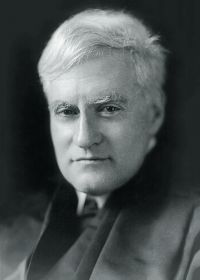
Portrait of Benjamin N. Cardozo Benjamin N. Cardozo Duplate Corporation v. Triplex Safety Glass Company of North America…

He will be heard with no more patience in an endeavor to diminish liability by ascribing his profits to the capacity indwelling in a patent. Whatever is at his call in the service of the enterprise-brawn and intelligence, f ctories and lands, patents and machinery-will be viewed upon an accounting as if held upon a quasi trust to contribute what it can to the profits of the business. The wrongdoer must yield the gains begotten of his wrong.
Source: Wikisource

Portrait of Benjamin N. Cardozo Benjamin N. Cardozo Duplate Corporation v. Triplex Safety Glass Company of North America…

Sales of the infringing product were not made at a level price. At times the price was high; at others it was low. The owner of the patent, in holding the infringers to an accounting, is not confined to all or nothing. There may be an acceptance of transactions resulting in a gain with a rejection of transactions resulting in a loss. Upon a statement of an account, a patentee is not looked upon as a 'quasi-partner of the infringers,' under a duty to contribute to the cost of the infringing business as a whole.
Source: Wikisource

Portrait of Benjamin N. Cardozo Benjamin N. Cardozo Duplate Corporation v. Triplex Safety Glass Company of North America…

The privilege of election is not contested by the defendants if costs as well as prices can be ascertained with precision. They take the ground, however, that if such precision is unattainable, the privilege must fail. But the master has found, and the parties are agreed, that in a business of this order there is no method of accounting, not impracticably burdensome, whereby the costs of operation can be apportioned and distributed except upon an average basis.
Source: Wikisource

Get perspective with Kwize: daily news enlightened by great literature