Summary

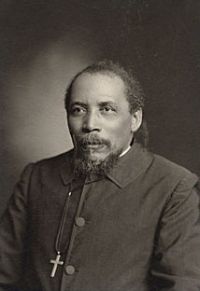
Portrait of Benjamin Tucker Tanner Benjamin Tucker Tanner The Negro's Origin: and Is the Negro cursed… (1869)

This we find in the curse pronounced. With this understanding how natural does their course become? how justifiable, in forsaking a brother, aye in compelling him to remain behind. These brethren had just experienced the wrath of the curse of God—had seen the floods descend, had heard the fountains of the deep break up, had felt the mighty throes of the earth be- neath the feet of their angered God, and from the great depths of their souls they sighed to be spared from another suck visitation.
Source: Wikisource

Portrait of Benjamin Tucker Tanner Benjamin Tucker Tanner The Negro's Origin: and Is the Negro cursed… (1869)

When you first named the subject of writing an Introduction, upon reflection of the subject, I thought it would be a good idea, for some one to write an Introduction for a second edition of the work, in which you would have a chance to enlarge, and the party introducing, would have a chance to examine, the sources of proof which you have introduced. By that means your work might not have only a transient existence, but it might possibly find a place among the few works that pass down from generation to generation.
Source: Wikisource

Portrait of Benjamin Tucker Tanner Benjamin Tucker Tanner The Negro's Origin: and Is the Negro cursed… (1869)

Having acknowledged the divinity of Noah's malediction, it will not do to suppose Canaan to be guilty; we must know it; at least our faith in the justice of God will not allow us to question his guilt for a moment. God's cursings are always proof positive of guilt. Our every conception of the Divine character demands this. He cursed and destroyed all the ante-diluvian world. Do any doubt their guilt? He cursed and destroyed Sodom. Do any doubt its guilt? Are not all His cursings, sufficient guarantees of guilt ?
Source: Wikisource

Get perspective with Kwize: daily news enlightened by great literature