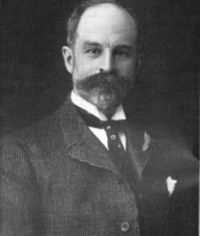
Bernadotte Perrin

Bernadotte Perrin

History (1912)

Summary

Portrait of Bernadotte Perrin Bernadotte Perrin,  History (1912)

“ The tales which Hellenes and Barbarians have told with or without pertinency, the marvels they have seen, the divine judgments they have illustrated, the wealth they have amassed, the crimes they have committed, their intrigues, loves, hates, and sorrows—these and more than these are welcome to Herodotus, and if he does not find them in sufficient abundance, then like a true Homeric poet he invents or adapts to suit himself. ”
Source: Wikisource

Portrait of Bernadotte Perrin Bernadotte Perrin,  History (1912)

“ But while Ephorus and Theopompus were yet writing, a new personage had entered the ancient world, who, in an amazingly short time, completely transformed it. Alexander, the son of Philip of Macedon, in a meteoric career of less than twenty years, surpassed in actual and palpable achievements all that the glowing imaginations of poets and prose romancers had devised for men to admire and wonder at. Once more, as in the sixth and fifth centuries, history became stranger and more fascinating than romance had been, and led the way to still bolder flights of fancy in a new romance. ”
Source: Wikisource

Portrait of Bernadotte Perrin Bernadotte Perrin,  History (1912)

“ In all the books, but especially in the last three, Herodotus is not a historian in the strict sense of the term—not as Hellanicus and Thucydides are historians. He does not seek by investigation to sift the true from the false and tell for all subsequent time what actually happened. He rather seeks to cast the vast material which he has collected on the narrower theme of Xerxes' invasion and the larger theme of the strifes between Hellene and Barbarian into such shape as is prescribed by the canons of epic and dramatic poetry, the two regnant forms of literary art, but to do this in prose. ”
Source: Wikisource

Get perspective with Kwize: daily news enlightened by great literature