“ We now reach the last decade of the fifteenth century; in which the late Flemish school already alluded to arose in Bruges and Ghent. In combination with those beautiful borders of fresh cut flowers painted in apparent relief upon pale gold or yellow, the delicate art of Memling and Gerard David produced small and exquisite miniatures with architectural and landscape accessories; the like of which had not yet been seen in the illustration of books, unless we find a parallel in the lovely and no less exquisite pictures in Florentine manuscripts of the same period. ”
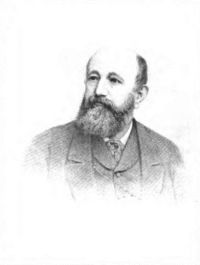
Bernard Quaritch
Summary
“Palæography”, is a work by Bernard Quaritch. It explores elements such as fifteenth century, writing and script.
Quotes from Palæography (Bernard Quaritch)
“ The figures of saints occupying niches, which were familiar to the visitants of churches, were the first models that led to the painting of miniatures with the figures in grey tints. It must have been, for a true artist, delightful to triumph over the difficulty of achieving the effects of relief and of modelling with the aid of a single pigment only. To be the master of such an art, and to handle the monochrome in such a way as to run with perfect touch through a gamut of gradations in tone, would surely have been more gratifying than to win success by the splendour of full illumination. ”
“ In the ninth century England and central France were easily ahead of all the other barbarian states. In Germany, in Aquitaine, in Spain, and in Northern Italy, the same system was followed, but with a prevailing stamp of barbarism, especially in the design of the human figure, which affords a striking contrast to the refined luxury of Carolingian art and the more sober splendour of English work. ”
