Summary

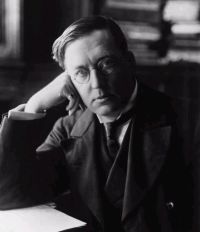
Portrait of M. R. James M. R. James The Wanderings and Homes of Manuscripts

Under the influence of the Renaissance, now enormously potent, every Italian noble forms a library. The scholars are seeking out the ninth-century copies of the classics, and they discard the Gothic (black-letter) hands of the thirteenth and fourteenth centuries in favour of the Carolingian minuscule (or, some say that of the twelfth century) . As early as 1426 we find books written in a script adapted and refined from this; we call it a Roman hand, though the great centre of its propagation seems to have been Florence.
Source: Gutenberg

Portrait of M. R. James M. R. James The Wanderings and Homes of Manuscripts

Illustrated books of the early centuries are the greatest of rarities. The two Virgils, the Vienna and the Cotton Genesis, the Homer at Milan, the Gospels of Rossano in Calabria and those of Sinope now at Paris, the Dioscorides at Vienna, the Pentateuch of Tours, the Joshua-roll at the Vatican—these are the most famous, and there are very few beside them. Among those few are some pieces of a Latin Bible written in the fourth century, and containing parts of Samuel and Kings, with paintings which, when fresh, must have been of high excellence.
Source: Gutenberg

Portrait of M. R. James M. R. James The Wanderings and Homes of Manuscripts

It is a temptation, when one turns to England, to enlarge upon the early history of Greek scholarship in the country, but it is a temptation which [17] must be resisted. We had a share in preparing for the revival of learning. Roger Bacon and Grosseteste (I say nothing of the earlier age, of Theodore of Tarsus and Bede) were men whose work in this direction has hardly met with full appreciation as yet; and later on we gave Erasmus a welcome and a home. But we did not rival Italy or France in the early scramble for Greek books.
Source: Gutenberg

Get perspective with Kwize: daily news enlightened by great literature