Summary

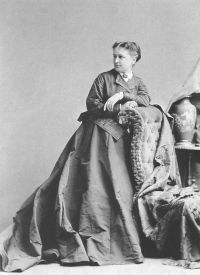
Portrait of Candace Wheeler Candace Wheeler The Development of Embroidery in America

The real charm of the thing, that which lends it a tender romance, is the legend worked upon the back of the cushion in brown silk stitches which are easily mistaken for the round-hand copperplate writing of the period—"Wrought where the peaceful Lehi flows." One seems to breathe the very air of the secluded valley, peopled by brethren and sisters set apart from the strenuous duties of the builders of a new nation, and distinguished for learned and devoted effort toward the perfection of moral, and spiritual, rather than the conquests of material, life.
Source: Gutenberg

Portrait of Candace Wheeler Candace Wheeler The Development of Embroidery in America

The women of today, 1920, have been called to work that is widely different from that of the ages when embroidery was a natural recourse and almost universal practice, but it is an art which has done too much for the progress of the world, in all its different phases, to die, or to cease to progress. There will always be quiet souls, whose lives have been made so by circumstances, who will find solace in the practice of needlework, so we may safely leave with them an art which has done so much for mankind.
Source: Gutenberg

Portrait of Candace Wheeler Candace Wheeler The Development of Embroidery in America

It is an endless and fascinating story of the leisure of women in all ages and circumstances, written in her own handwriting of painstaking needlework and an estimate of an art to which gold, silver, and precious stones—the treasures of the world—were devoted. More than this, its intimate association with the growth and well-being of family life makes visible the point where savagery is left behind and the decrees of civilization begin.
Source: Gutenberg

Get perspective with Kwize: daily news enlightened by great literature