Summary

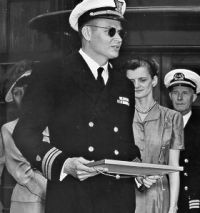
Portrait of Carlton Skinner Carlton Skinner USS Sea Cloud, IX 99, Racial Integration for Naval Efficiency

I remembered also the history of World War I when there was tension and animosity against military age men remaining in the United States from Navy personnel on sea duty and Army personnel serving overseas. White feathers were passed out to men not in uniform. There had been race riots during and after World War I. There was enough racial antagonism in the United States during World War II. If white sailors were to conclude that Negro sailors had the preferred positions of shore duty, I felt that race rioting could break out.
Source: Wikisource

Portrait of Carlton Skinner Carlton Skinner USS Sea Cloud, IX 99, Racial Integration for Naval Efficiency

The combination of this incident with my general views on the gravity of the world crisis led me to a consideration of the whole problem of naval use of manpower. Without having statistics on the assignment of naval personnel to different shipboard duties, it seemed clear to me that the steward and steward's mate complement of both Coast Guard and Navy ships could not exceed two to three percent of the total seagoing personnel. The universal draft was then being applied as the source of all manpower for all the armed services.
Source: Wikisource

Portrait of Carlton Skinner Carlton Skinner USS Sea Cloud, IX 99, Racial Integration for Naval Efficiency

For Negroes to be well qualified, they had to go to sea and go to sea with qualified enlisted men as petty officers and fellow seamen. This meant the ship had to be an integrated ship--black and white at all levels, officers, petty officers and seamen.
While I had had no direct experience and had seen no documents, I had heard that the Navy had tried an all-Negro destroyer or destroyer escort, by a process of selecting the brightest and best qualified, and training for ratings ashore.
Source: Wikisource

Get perspective with Kwize: daily news enlightened by great literature