“ Truly they will reward the amateur of scenery: the lofty ridge whose summit is reached three parts of the way revealing widespreading views out to sea on the left, and over wonderful hills and vales inland on the right. You have a taste of what this route is like immediately after leaving Dorchester and its western avenue behind, for cresting the sky-line of the downs on the left are the giant prehistoric earthworks of Maiden Castle, glooming darkly upon the road. ”
Summary
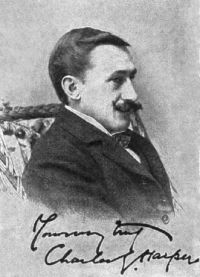
Charles G. Harper’s Wessex is a literary and geographical exploration of Dorset and surrounding regions, weaving vivid descriptions of landscapes, historical sites, and local customs. Through evocative prose, Harper highlights the region’s rugged beauty—cathedrals, prehistoric earthworks, and coastal villages—while contrasting its enduring charm with the advance of modernization.
The text meanders through towns like Wareham and Dorchester, emphasizing their architectural legacy, rural markets, and links to literary figures like Thomas Hardy. By juxtaposing ancient landmarks with the arrival of railways, Harper crafts a nuanced portrait of Wessex as a place where history and tradition endure amid change.
Quotes from Wessex (Charles G. Harper)
“ In and out of this harbour small sailing-vessels make their way; and certain scattered cottages, the Bridport Arms Inn, and some few recent houses, all standing in the sands and minute gravel of the Chesil Beach, which ends here, make believe that West Bay is a seaside resort. On either side of it the cliffs rise to great heights, and are partly of a friable, earthy nature, yellow in hue. ”
“ Hardy made the old place figure in his greatest novel, Tess of the D’Urbervilles. Moreover, it does not merely look as though it should be haunted, but actually has, or had, that reputation. It is a particularly creepy and full-flavoured ghost-story that belongs to Woolbridge House—none other, indeed, than that of a passionate Turberville who murdered one of his guests when out for a drive in the family chariot. ”
“ As we see it now, within its grassy close, the cathedral is a singularly perfect work, chiefly of the thirteenth century, rich above all other English cathedrals in delicate sculpture, and with sixty carved miserere seats that display the sweetest artistic fancy, the closest study of natural forms, and the most exquisite craftsmanship in wood-carving to be found in England. ”
“ WAREHAM—BERE REGIS—THE HEATHS The Wessex of which I shall treat in these gossiping pages is that Wessex of romance and of the great dairy-farms, which has been little touched by the influence of railways. Hampshire and Wiltshire—Winchester and Salisbury—have become too closely in touch with London to stand so fully upon the ancient ways as does Dorset, with the greater part of its north-western neighbour, Somerset. ”
“ No, modern Dorchester is not like that, and its chief features—the noble elm avenues, that struck the traveller by road into and out of the town with admiration—have had their exquisite nobility qualified by time and change. ”
“ WOOLBRIDGE HOUSE—LULWORTH COVE—OWERMOIGNE—WEYMOUTH The seventeen miles between Wareham and Dorchester, through Wool and Warmwell Cross, traverse pretty country and encounter interesting places. Passing the “Pure Drop” Inn, we come to the hamlet of East Stoke. Half a mile to the left, across the River Frome, which runs parallel with the road thus far, are the scanty remains of Bindon Abbey, in a dark situation amid dense trees, and with black and stagnant moat. ”
“ Nothing can give one a greater sense of the difference between the exploited modernized coast-line and the real old Wessex than the journey from up-to-date Bournemouth to Poole, that olden nest of smugglers, and thence across to the untamed heaths and to Wareham. In this way, then, we will begin our exploration of Wessex.Wareham is a little town which has been left to drowse peacefully in its old days. Nothing has happened in Wareham since its almost complete destruction by fire (1762) , an event which here as distinctly marks an era as does the Great Fire of London in the City. ”
“ Just where the shoulders of those lofty chalk hills are at their highest and steepest, the stranger will see with that gasp of astonishment which is the proper meed of such a thing the gigantic figure of a man outlined upon the grass. ”
“ Thus we have the unusual spectacle of a great abbey church chiefly of post-Reformation date. The odd reproduction in stone on the west front of Bishop Oliver King’s dream, representing angels climbing Jacob’s ladders, is more singular than beautiful.Box and Corsham, respectively six and nine miles from Bath, to the east, along the old coach-road to London, are worth an excursion, for here you may see the quarries whence comes the fine-grained Bath stone. Box Tunnel, on the Great Western Railway, was considered a stupendous work in the early days of railways. ”
“ If in this connection you choose to regard the author of these pages as a commercial traveller in the interest of Wessex, displaying samples of the picturesque wares the West of England can offer the tourist, it will entirely fit the humour in which they were penned. To aid the medium of words is added a feast of colour in the accompanying selected views, which show the lovely golden russet interior of Sherborne Abbey, the misty rich blue haze of Blackmore Vale, the architectural majesty of Wells, and much else that awaits the traveller in Dorset and Somerset. ”
“ In another seven miles we come to the slumberous cathedral city of Wells, in its rich vale beneath the Mendips. The population of Wells is about five thousand, and decreasing, or at the most stationary, and thus there are no unhistorical modern suburbs, and the outskirts are quite innocent of notices offering land “ripe for building.” It is true that there are two railway-stations at Wells, but they are the product of rival railway politics, rather than called into47 existence by necessity. ”
“ Beyond the extremely small village the road reaches the steep escarpment whence the great bastioned mid-Dorset heights go, in many places with dramatic steepness down into the far-spreading Blackmore Vale. The road itself naturally descends at the least steep place to the levels of Middlemarsh; but it is very well worth while to explore for some distance along the by-road to the left, which follows the very edge of this ridge. ”
“ Corsham is pretty, but one of the prettiest villages in England will be found some four miles north at Castle Combe, in a profound valley through which flows the Box Brook. The castle of Castle Combe has disappeared. It stood somewhere62 on the lofty wooded heights that tower above the secluded village. No modern house varies the peaceful old cottage architecture of the street, which follows the windings of the brook; and the old church and roofed-in market-cross complete the picture of a village unaltered since the spacious times of Good Queen Bess. ”
“ Dunster is a picture—nay, it is a gallery of pictures, for one meets you at every turn. There is the sleepy town of one broad street, with the castle on its wooded height in the background, and in the foreground the old Yarn Market, a remarkable timber-framed building which seems to be again awaiting the marketing of yarn. It was built, they say, in 1609, and the weather-vane, dated 1647, marks the repairs effected after the siege of the castle in 1646. That the reigning family of Dunster is named Luttrell is evident from the name of the inn, the Luttrell Arms, close by. ”
“ Wells is the nearest approach in England to the ideal Cathedral city of poets and students, and the Market-place is so little disturbed by markets that the plashing of the perennial springs which gives Wells its name is easily heard from the fountain. ”
“ It is an old rather grim and grey village that has had troubles—not romantic troubles, please to understand, but economic ones. It has a “past”—neither scandalous nor noble, but just the past of a place that has seen better days and has suffered—suffered,9 truly, in the peculiarly Dorset way, from fire. How many times the dry thatch of the cottages has gone up in flame and smoke I know not; only I know—and all may see—that experience has not made the villagers wise, for it is a long street of thatched cottages yet ”
“ The Bishop’s Palace, largely an Early English work, is a building beautiful enough, and looking like enough to be the scene of the legend of the Briar Rose and the Sleeping48 Beauty. Wells is the most cloistral of English cathedral cities. It is the one ideal cathedral city for scholar and poet that England possesses, for the rest are for the most part pushful commercial places, with electric tramways and the like manifestations of modernity. Of these things Wells knows nothing. ”
“ The great figures in Swanage some forty years ago were Mr. Mowlem and Mr. Burt, of the London contracting firm of Mowlem and Burt, and thus many of the miscellaneous discarded things that found their way into the firm’s yard came at last to a resting-place here. Thus the Town Hall frontage was formerly that of Mercers’ Hall in Cheapside, and the Gothic clock-tower that stands on the shore was formerly on the south side of London Bridge, where it was erected as a memorial to the Duke of Wellington. ”
“ The great church itself is of the loveliest form and colour. Externally presenting the appearance of a Late Perpendicular building, with architectural details exhibiting the approach of the Renaissance, the interior discloses, particularly in the transepts, the fact that the core of the building is actually in great degree Norman, and that the late fourteenth and early fifteenth-century work is practically a refacing in a later fashion. ”
“ The like upside-down condition of the local geology may be observed at the romantic spot, some two miles farther west, called Durdle Door, where the cliffs plunge into the sea with their stratification perpendicular and streaked with the loveliest tints. The “door” of Durdle Door is a natural archway in the cliffs. If time and energy permit, there is a splendid field for exploration eastwards, past East Lulworth and on to Arishmill Gap, Worbarrow Bay, and Kimmeridge. ”
“ The inhabitants of Weymouth did well to raise a statue to “Farmer George,” as an acknowledgment of benefits received. It was unveiled in 1810, and has since that time aroused the mingled amusement and contempt of all sorts and conditions of men. For my part, I keep all my contempt for the public statues erected in London yester-year, and cherish a liking for that statue and its22 surroundings. It is at least a composition, and one ought to feel grateful to the sculptor, who represented the King in the ordinary dress of the age, instead of in an impossible Roman costume. ”
“ This is the most picturesque corner of the town, and gives upon the harbour, past a house in whose gable wall still rests the cannon-shot fired in the siege of 1644. The harbour is really the sea-estuary of the River Wey. The old original Weymouth is on the other side, with the beautiful backwater on the right, reaching to Radipole.The chief scenic asset of Weymouth is, of course, the great rock of Portland, the Gibraltar of Wessex, the “Isle of Portland,” tethered to the mainland only by the long shingly spit of the Chesil Beach. ”
“ There is no need, it may be presumed, to instruct the reader in the two things for which Cheddar is deservedly famous—its cheese and cliffs. Time was, and that until quite recent years, when the tourist who by some strange chance knew nothing of Cheddar cheese might proceed through the picturesque village without a glimpse of its staple product. So modest was Cheddar that no one would deduce or suspect a cheese in the entire district. But nowadays—these being days of strenuous publicity—shops that do nothing else but sell cheeses are a feature of the place. ”
“ The stranger would hardly expect to see so much shingle in the whole world as he finds here. It is a vast accumulation of pebbles running westward hence as far as West Bay, Bridport. Its total length is eighteen miles, and it varies from a hundred yards to more than a quarter of a mile in breadth, its pebbles ranging gradually in size from Brobdingnagian specimens, about the size of a breakfast-plate, at Portland to the tiniest particles at West Bay. ”
“ Unquestionably, ancient warfares must have raged along this way, for prehistoric tumuli are plentiful along the downs as we progress.Passing Bridehead Park, a road leads steeply down on the left to Longbredy, where will be found the deserted old manor-house of Kingston Russell, whence the Russells, Dukes of Bedford, sprang from obscurity in 1502, in the person of the courtly and ingratiating John Russell. Admiral Sir Thomas Masterman Hardy was also born here, and under the same roof died John Lothrop Motley, historian of the Dutch Republic, some thirty years ago. ”
“ The church contains a carved, painted, and gilt roof that is worth travelling all Wessex to see.The immediate neighbour of Woolbridge House, on this side of the Frome, is Wool railway-station, and on the left again is the village of Wool. The coast is reached in four and a half miles, at Lulworth, where those who do not feel equal to thoroughly tracing the wild and solitary and extremely beautiful coast-line of Dorset can at least sample it at one of its most delightful spots. ”
“ This is Woolbridge House. The bridge by which one crosses the Frome to it is much more ancient than the house itself, and is a fine, stone-built Gothic structure, with pointed arches and cut-waters up and down stream. The mansion, now a farmhouse belonging to the Erle-Drax family, was once the property of the Turbervilles, who became possessed of some of the lands of Bindon Abbey ”
“ Behind it, on large tablets, is inscribed a mass of astronomical information, in which most of the family secrets of the solar system are laid bare; and, with a care for the weaknesses of human nature, there are slabs on which those visitors who feel they must carve their names are invited to do so. ”
“ CERNE ABBAS—THE VALE OF BLACKMORE—SHERBORNE—SHAFTESBURY Northwards out of Dorchester we come by favour of the long straight old Bristol road into the heart of the great Wessex dairying district of Blackmore Vale; but before reaching that region of green fatness we pass through the country associated in the minds of all readers of the Wessex novels with The Woodlanders. The road goes through the village of Charminster and in the valley of the little river Cerne, under the chalk downs that gradually rise as the decayed town of Cerne Abbas is approached. ”
“ It takes that title from the clear springs that gush forth in the neighbourhood of the cathedral, and form delightful pools at its south-eastern end, serving also to surround the fortified Bishop’s Palace with a pellucid moat. The Diocese of Wells was founded A.D. 704 by Ina, King of Wessex. Never have the rude buffetings of warfare disturbed the quiet of the place, whose history is solely ecclesiastical, and is concerned only with the long succession of Bishops and the various rebuildings of the cathedral. ”
“ Coming into Dorchester, the road traverses the water-meadows of the Frome, over the spot called Ten Hatches, and across the little bridges that were the scene of Henchard’s despair, in26 The Mayor of Casterbridge. “Casterbridge,” as everyone familiar with Wessex knows, is Dorchester—and an excellent name, too, for this grave town of early British and Roman antecedents. It would be vain to pretend that Dorchester is picturesque. If you expect in it nodding gables, and half-timbered fifteenth-century buildings to be the note of it, you will experience a disappointment in seeing the real thing. ”
“ Does the general reader, it may be asked, ever turn aside from his generalities,57 and particularly consider the great space of time in which the Romans held Britain as a prosperous colony? For nearly four centuries they established themselves in this land, a settled community, with the arts and civilization brought from their native shores. ”
“ Thomas Hardy styles “Egdon Heath.” By that name the wild stretch of moorlands marked on the maps as “Bere Heath,” “Hyde Heath,” “Decoy Heath,” etc., is understood, chiefly between Wareham on the east and Dorchester on the west, and roughly bounded on the south by the River Frome. It is not merely a wild, but also a very beautiful, region, on whose borders the novelist himself, the creator of so many alluring rustics, and the true begetter11 of the Hardy Country, was born, at Upper Bockhampton, 1840. Nature reigns, unchallenged, on these swarthy moors of brown and purple. ”
Common terms
Similar works
The Hardy Country: Literary landmarks of the Wessex Novels…The Heart of Wessex (Sidney Heath…Memorials of Old DorsetThe Life of Thomas Hardy (Brennecke…The model village and its cottages…The Comforts of Home (Ralph Bergengren…Somerset Historical Essays (Joseph Armitage Robinson…Wanderings in Wessex (Edric Holmes…Dictionary of National Biography…History of the Cathedral Church of Wells…
