Summary

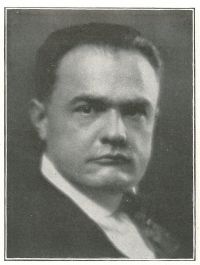
Portrait of Charles Pergler Charles Pergler America in the Struggle for Czechoslovak Independence (1926)

The choice of peoples played no part in it at all. It contemplated binding together racial and political units which could be kept together only by force—Czechs, Magyars, Croats, Serbs, Roumanians, Turks, Armenians—the proud states of Bohemia and Hungary, the stout little commonwealths of the Balkans, the indomitable Turks, the subtle peoples of the East. These peoples did not wish to be united. They ardently desired to direct their own affairs, would be satisfied only by undisputed independence. They could be kept quiet only by the presence or the constant threat of armed men.
Source: Wikisource

Portrait of Charles Pergler Charles Pergler America in the Struggle for Czechoslovak Independence (1926)

I am utterly opposed to any separate peace on the part of this country, just as I would view as a calamity to the cause of real democracy a separate peace of Russia with Germany. This world can be made a tolerable place to live in only by a concert of the democratic peoples of the world. Separate peace on the part of any of the allied countries would preclude such a concert, and would be a fatal blow to the hopes for such an organization of the world's democracies as would insure permanent peace.
Source: Wikisource

Portrait of Charles Pergler Charles Pergler America in the Struggle for Czechoslovak Independence (1926)

Between the legal titles which form the foundation of the right of the dynasty to the throne in Hungary and Bohemia there is not merely an analogy, but a complete identity. That is true of their origin and time, method, conditions and principles, as well as their literal wording. The Bohemian land is not a patrimonium, no so-called hereditary land, no mere appendage of Austria, but a land which may appeal to diplomatic negotiations and mutual agreements.
Source: Wikisource

Get perspective with Kwize: daily news enlightened by great literature