Summary

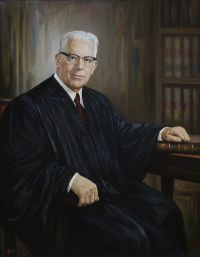
Portrait of Earl Warren Earl Warren Squire v. Capoeman — Opinion of the Court

We agree with the Government that Indians are citizens and that in ordinary affairs of life, not governed by treaties or remedial legislation, they are subject to the payment of income taxes as are other citizens. We also agree that, to be valid, exemptions to tax laws should be clearly expressed. But we cannot agree that taxability of respondents in these circumstances is unaffected by the treaty, the trust patent or the Allotment Act.
Source: Wikisource

Portrait of Earl Warren Earl Warren Squire v. Capoeman — Opinion of the Court

It argues:
'As citizens of the United States they are taxable under the broad provisions of Sections 11 and 22 (a) of the Internal Revenue Code of 1939, which imposes a tax on the net income of every individual, derived from any source whatever. There is no exemption from tax in the Quinaielt Treaty, the General Allotment Act, the taxing statute, or in any other legislation dealing with taxpayers' affairs.
Source: Wikisource

Portrait of Earl Warren Earl Warren Squire v. Capoeman — Opinion of the Court

The wisdom of the congressional exemption from tax embodied in Section 6 of the General Allotment Act is manifested by the facts of the instant case. Respondent's timber constitutes the major value of his allotted land. The Government determines the conditions under which the cutting is made. [20] Once logged off, the land is of little value. [21] The land no longer serves the purpose for which it was by treaty set aside to his ancestors, and for which it was allotted to him.
Source: Wikisource

Get perspective with Kwize: daily news enlightened by great literature