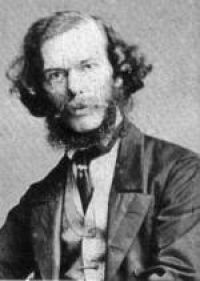
Edward Dutton Cook

Edward Dutton Cook

Summary

Portrait of Edward Dutton Cook Edward Dutton Cook Dictionary of National Biography… (1885)

He was of pleasing person, good judgment, his voice was sonorous and distinct, and from his success in the impassioned declamatory parts of tragedy he obtained the nickname of ‘Tyrant Aickin’—‘a character in private life no man was more the reverse of, either in temper or the duties of friendship.’ Nor did all his merit lie in tragedy
Source: Wikisource

Portrait of Edward Dutton Cook Edward Dutton Cook Dictionary of National Biography… (1885)

Abbot has taken it in his head that noise is tragedy, and a tremendous noise he accordingly makes. It is Stentor with a trumpet. . . . We hear he is a pleasant person everywhere but on the stage, and such a man may be reasonably at a disadvantage with his neighbours somewhere.’ Abbot was the author of two melodramas, the ‘Youthful Days of Frederick the Great’ and ‘Swedish Patriotism, or the Signal Fire,’ produced at Covent Garden in 1817 and 1819 respectively, and both founded upon French originals. Abbot left England to try his fortune in America, meeting there with small success.
Source: Wikisource

Portrait of Edward Dutton Cook Edward Dutton Cook Dictionary of National Biography… (1885)

His son, ‘Young Astley,’ also an admired equestrian performer, to whom he had bequeathed the interest arising from his somewhat encumbered property, survived seven years only. He also died in Paris, and was interred beside his father in Père-la-Chaise. Philip Astley was the best horse-tamer of his time. He usually bought his horses in Smithfield, caring, as he said, ‘little for shape, make, or colour: temper was the only consideration.’ He rarely gave more than five pounds for a horse.
Source: Wikisource

Get perspective with Kwize: daily news enlightened by great literature