Summary

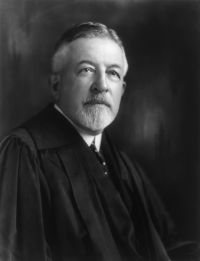
Portrait of Edward Terry Sanford Edward Terry Sanford United States v. Flannery — Opinion of the Court

It is clear, in the first place, that the provisions of the Act in reference to the gains derived and the losses sustained from the sale of property acquired before March 1, 1913, were correlative, and that whatever effect was intended to be given to the market value of property on that date in determining taxable gains, a corresponding effect was intended to be given to such market value in determining deductible losses.
Source: Wikisource

Portrait of Edward Terry Sanford Edward Terry Sanford United States v. Flannery — Opinion of the Court

This tax was held invalid, under the authority of Goodrich v. Edwards, on the specific ground that 'the owner of the stock did not realize any gain on his original investment by the sale in 1916.' In the second transaction involved the taxpayer had purchased certain bonds in 1902 and 1903 for $231,300, which he sold in 1916 for $276,150. Their market value on March 1, 1913, was $164,480. A tax was assessed upon the difference between the selling price and the market value of the bonds on March 1, 1913.
Source: Wikisource

Portrait of Edward Terry Sanford Edward Terry Sanford United States v. Flannery — Opinion of the Court

We cannot sustain the contention that the decision in Goodrich v. Edwards, is not entitled to controlling weight in the matter of deductible losses because of the Government's confession of error, or because it involved the question of taxable gains, as to which it is said, that under a different construction of the Act a grave constitutional question would have arisen which could have no application to the question of deductible losses.
Source: Wikisource

Get perspective with Kwize: daily news enlightened by great literature