Summary

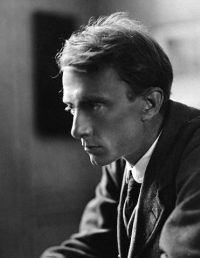
Portrait of Edward Thomas Edward Thomas The Happy-go-lucky Morgans

Not much less fantastic was our world than the one called up by lights seen far off before a traveller in a foreign and a dark, wild land.
Therefore Spring at Lydiard Constantine was to Philip and me more than a portion of a regular renascence of Nature. It was not an old country marvellously at length arraying itself after an old custom, but an invasion of the old as violent as our suburban St Michael’s Mount. It was as if the black, old, silent earth had begun to sing as sweet as when Jessie sang unexpectedly “Blow away the morning dew.”
Source: Gutenberg

Portrait of Edward Thomas Edward Thomas The Happy-go-lucky Morgans

In those old days, if Ann was to be believed, there was nothing but war. The young men went out to battle and never came back except as spirits, or as old men, or as worse than either—some of them having no more legs or arms than a fish, some crawling on their bellies with their beards in the mud, or flapping along in the wind like a kind of bird, or as lean and scattered as crickets—so that the children laughed at them first and then ran away crying to their mothers because they had such fathers.
Source: Gutenberg

Portrait of Edward Thomas Edward Thomas The Happy-go-lucky Morgans

This was so like the old Ann that I was delighted, with all my conceit. I remembered that first visit well, limping into the yard the day after the paper-chase, and seeing big Jack (aged then about twenty) and tall Roland (less than two years younger) discussing a greyhound with a blackguard in an orange neck-tie, Jessie (my own age) surrounded by pigeons, Mr Morgan and Mr Torrance at the top of the steps looking on, and away on the pond under the elms little Harry and Lewis crying for help to release their craft from the water-lilies of that perilous sea.
Source: Gutenberg

Get perspective with Kwize: daily news enlightened by great literature