Summary

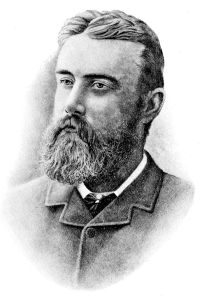
Portrait of Ernest Favenc Ernest Favenc The History of Australian Exploration from 1788 to 1888

As he was when Dampier came to our shores, so is he now in the yet untrodden parts of Australia, and the explorer knows that from him he can only gain but a hazardous and uncertain tale of what lies beyond.
But, in this utter want of knowledge of the country to be explored, where even the physical laws do not assimilate with those of other continents, lies the great charm of Australian exploration. It is the spectacle of one man pitted against the whole force of nature—not the equal struggle of two human antagonists, but the old fable of the subtle dwarf and the self-confident giant.
Source: Gutenberg

Portrait of Ernest Favenc Ernest Favenc The History of Australian Exploration from 1788 to 1888

No fringe of low mangrove covered flats, studded with inlets and salt-water creeks, masking the entrance of a river, was here to be found. A bold outline of barren cliffs, or a clean-swept sandy shore, alone fronted the ocean, and Flinders, constantly on the alert as he always was for anything approaching an outlet or river mouth, would scarcely have missed one here. As for any knowledge of the interior that was gained, of course there was none, even the conjectures of a worn out, starving man, picking his way painfully around the sea shore, would have scarcely been of much value.
Source: Gutenberg

Portrait of Ernest Favenc Ernest Favenc The History of Australian Exploration from 1788 to 1888

The moisture-laden clouds that visit us, break on the sides of this hat, giving the brim, or coast, the full benefit of their precipitation; drifting over the plateau, or crown, with rapidly decreasing bulk. Thus, the great plain, in size the greatest, and in soil the richest part of us, is always labouring under the curse of irregular and inefficient rainfall; and whatever good we may do in the way of water storage and we may do so much-we have always the threat of many years of drought hanging over, during which our treasury of water will be drained, and not replenished.
Source: Gutenberg

Get perspective with Kwize: daily news enlightened by great literature