Summary

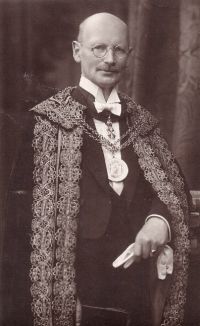
Portrait of Ernst von Dobschütz Ernst von Dobschütz The Influence of the Bible on Civilisation

We cannot drop this period from our history; nor can Americans deny that this mediæval civilisation is an element even in their modern civilisation.
There is an ingenious theory that history always repeats itself: the German migrations corresponded to the migrations of the Greek tribes; the time of chivalry was like the time of Homer's heroes; humanism represents the age of Plato and Aristotle; only the repetition always has the advantage of using the results of the former cycle. But we must not forget that from time to time new forces enter those cycles and change their relation.
Source: Gutenberg

Portrait of Ernst von Dobschütz Ernst von Dobschütz The Influence of the Bible on Civilisation

And I feel sure that the time must come, and will come, when private reading of the Bible will again be a common practice among Christians.
But the Bible's task is not only to sustain individual piety; it has a second duty to perform. Christianity is not a mere aggregation of Christian individuals but a community—a church, if you will. It is necessary for any community to have a standard, for any church to have a creed.
Source: Gutenberg

Portrait of Ernst von Dobschütz Ernst von Dobschütz The Influence of the Bible on Civilisation

Luther, owing to his familiarity with Saint Paul, understood that Christianity had nothing to do with the Law; the whole notion of the Law had to be dropped out from the field of religion. Law there must be in the government of the state—it would not be necessary even there, if all people were true Christians—but for the wicked there must be a law and there must be punishment. The Christian's life, however, is not a slave's obedience to injunctions but a child's glad doing of his father's will; he knows what his father wants him to do and he does it joyfully.
Source: Gutenberg

Get perspective with Kwize: daily news enlightened by great literature