Summary

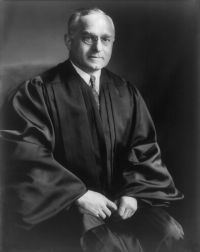
Portrait of Felix Frankfurter Felix Frankfurter United States v. Universal Cit Credit Corp…

Thus, underpayments based on violations of the statute as to these piece workers could not be compounded into a single offense with unrelated underpayments which resulted from the decision that a certain activity was not work, merely because the two kinds of underpayments occurred in the same workweek or involved the same employee. Whether an aggregate of acts constitute a single course of conduct and therefore a single offense, or more than one, may not be capable of ascertainment merely from the bare allegations of an information and may have to await the trial on the facts.
Source: Wikisource

Portrait of Felix Frankfurter Felix Frankfurter United States v. Universal Cit Credit Corp…

Not that penal statutes are not subject to the basic consideration that legislation like all other writings should be given, insofar as the language permits, a commonsensical meaning. But when choice has to be made between two readings of what conduct Congress has made a crime, it is appropriate, before we choose the harsher alternative, to require that Congress should have spoken in language that is clear and definite. We should not derive criminal outlawry from some ambiguous implication.
Source: Wikisource

Portrait of Felix Frankfurter Felix Frankfurter United States v. Universal Cit Credit Corp…

Underpayments of the same employees are split into separate counts of the information, and record-keeping violations during the same week are split to serve as the basis of separate counts.
It would be self-deceptive to claim that only one answer is possible to our problem. But the history of this legislation and the inexplicitness of its language weigh against the Government's construction of a statute that cannot be said to be decisively clear on its face one way or the other.
Source: Wikisource

Get perspective with Kwize: daily news enlightened by great literature