Summary

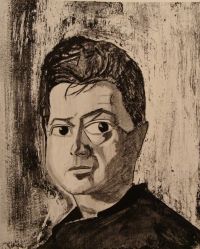
Portrait of Francis Bacon Francis Bacon The Wisdom of the Ancients — Chapters XI-XVIII

Introduction - The fable of Orpheus, though trite and common, has never been well interpreted, and seems to hold out a picture of universal philosophy; for to this sense may be easily transferred what is said of his being a wonderful and perfectly, divine person, skilled in all kinds of harmony, subduing and drawing all things after him by sweet and gentle methods and modulations. For the labours of Orpheus exceed the labours of Hercules, both in power and dignity, as the works of knowledge exceed the works of strength.
Source: Wikisource

Portrait of Francis Bacon Francis Bacon The Wisdom of the Ancients — Chapters XI-XVIII

And thus far the fable reaches of Proteus, and his flock, at liberty and unrestrained. For the universe, with the common structures and fabrics of the creatures, is the face of matter, not under constraint, or as the flock wrought upon and tortured by human means. But if any skilful minister of nature shall apply force to matter, and by design torture and vex it, in order to its annihilation, it, on the contrary, being brought under this necessity, changes and transforms itself into a strange variety of shapes and appearances
Source: Wikisource

Portrait of Francis Bacon Francis Bacon The Wisdom of the Ancients — Chapters XI-XVIII

The death of such youths seldom fails to meet with infinite pity; as no mortal calamity is more moving and afflicting, than to see the flower of virtue cropped before its time. Nay, the prime of life enjoyed to the full, or even to a degree of envy, does not assuage or moderate the grief occasioned by the untimely death of such hopeful youths
Source: Wikisource

Get perspective with Kwize: daily news enlightened by great literature