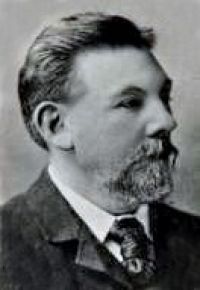
Frank Cundall

Frank Cundall

Summary

Portrait of Frank Cundall Frank Cundall Historic Jamaica (1915)

To this sink-hole the bodies of Hutchinson’s victims were carried by the slaves on a plank in the dead of night, and one edge being placed at the edge of the hole, the other was raised and the body shot down never to be seen again by human eyes. Many of his victims were persons against whom he had no grudge, and murder was evidently a mania with the wretched man. Edinburgh Castle overlooked the road, and it was Hutchinson’s playful little practice to stand at one of the loopholes and fire at any solitary white traveller who might be passing.
Source: Gutenberg

Portrait of Frank Cundall Frank Cundall Historic Jamaica (1915)

Immediately under foot rose several lower ranges of mountains—those nearest us, covered with laurel-looking coffee-bushes, interspersed with negro villages hanging among the fruit trees like clusters of birds’ nests on the hill-side, with a bright green patch of plantain suckers here and there, and a white-painted overseer’s house peeping from out the wood, and herds of cattle in the guinea-grass pieces.
Source: Gutenberg

Portrait of Frank Cundall Frank Cundall Historic Jamaica (1915)

Its sad fate in the hurricane of 1744 can never be remembered without horror. “The sea bursting its ancient limits overwhelmed that unhappy town and swept it to instant destruction, leaving not a vestige of man, beast, or habitation behind. So sudden and comprehensive was the stroke,” says Bryan Edwards, “that I think the catastrophe of Savanna-la-Mar was even more terrible, in many respects, than that of Port Royal.”
The “Spanish road from Bluefields Bay to Martha Brae, by the head of the Great River,” as Long wrote, is said to be still in existence.
Source: Gutenberg

Get perspective with Kwize: daily news enlightened by great literature