Summary

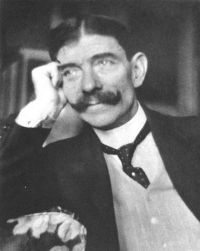
Portrait of Frank Harris Frank Harris Shakespeare and His Love: A Play in Four Acts and an Epilogue (1910)

Miss Fitton:
In truth? How strange!
Shakespeare:
I have always loved to be alone. In unfrequented woods I used to build myself a world of dreams and hold a court of fancied creatures. But now the dreams have changed to memories; you 71come to me and I recall your words and looks and beauties; kiss your hands and eyes and lips. Oh, my thought-world is paradise with you as goddess-queen.
Miss Fitton:
You must never make me jealous. Heal that at once as you would heal a pain of mine. It makes some women love more, I think; it would kill all love in me. I am too proud to endure its sting.
Source: Gutenberg

Portrait of Frank Harris Frank Harris Shakespeare and His Love: A Play in Four Acts and an Epilogue (1910)

Chettle:
No, bully boy, no: I’ve never been rich enough to keep a conscience: never! With us poor devils conscience is like a court-suit put by for state occasions and then used as little as may be: we pawn it sometimes for a dinner. Conscience, look ye, is a jade that still cries “No, no!” and never helps with brave encouragement: a good defender of the rich; but a born foe of the poor, laming enterprise. No, no, lad, no conscience for me; a bad one’s worse than a belly-ache, and with a good one I’d starve. Conscience is like a shrewish wife (have I touched ye there, Ben?)
Source: Gutenberg

Portrait of Frank Harris Frank Harris Shakespeare and His Love: A Play in Four Acts and an Epilogue (1910)

Had Southampton any news?
Shakespeare:
That Raleigh still inflames the Queen against the Irish.
Herbert:
We’ll make short work of him; he’s staled with use. The Queen laughs at him. I want her to hear your play, and to give you a place with the Lord Chamberlain as Master of the Revels—Judge accredited of plays and players! Leave it to me, my friend! I’ll kiss her lips and praise her legs till she does all we want. Our star is climbing up—up!
Shakespeare:
Your old loving thought for me—but who climbs should go light, and not be burdened with another’s weight.
Source: Gutenberg

Get perspective with Kwize: daily news enlightened by great literature