Summary

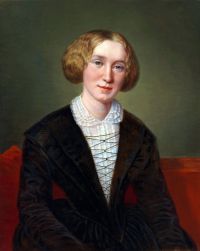
Portrait of George Eliot George Eliot The Mill on the Floss — Book 6… (1860)

Maggie always tried in vain to go on with her work when music began. She tried harder than ever to-day; for the thought that Stephen knew how much she cared for his singing was one that no longer roused a merely playful resistance; and she knew, too, that it was his habit always to stand so that he could look at her. But it was of no use; she soon threw her work down, and all her intentions were lost in the vague state of emotion produced by the inspiring duet,–emotion that seemed to make her at once strong and weak; strong for all enjoyment, weak for all resistance.
Source: Wikisource

Portrait of George Eliot George Eliot The Mill on the Floss — Book 6… (1860)

When Philip entered the room, he was going merely to bow to Maggie, feeling that their acquaintance was a secret which he was bound not to betray; but when she advanced toward him and put out her hand, he guessed at once that Lucy had been taken into her confidence. It was a moment of some agitation to both, though Philip had spent many hours in preparing for it; but like all persons who have passed through life with little expectation of sympathy, he seldom lost his self-control, and shrank with the most sensitive pride from any noticeable betrayal of emotion.
Source: Wikisource

Portrait of George Eliot George Eliot The Mill on the Floss — Book 6… (1860)

Stephen rolled out, with saucy energy,–
"Shall I, wasting in despair, Die because a woman's fair?" and seemed to make all the air in the room alive with a new influence. Lucy, always proud of what Stephen did, went toward the piano with laughing, admiring looks at him; and Maggie, in spite of her resistance to the spirit of the song and to the singer, was taken hold of and shaken by the invisible influence,–was borne along by a wave too strong for her.
Source: Wikisource

Get perspective with Kwize: daily news enlightened by great literature