Summary

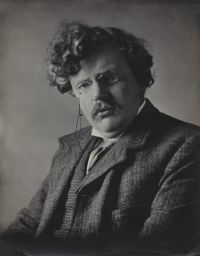
Portrait of Gilbert Keith Chesterton Gilbert Keith Chesterton Appreciations and Criticisms of the Works of Charles Dickens… (1911)

Dickens knew no history, but he had all history behind him in feeling that a pure democracy does tend, when it goes wrong, to be too traditional and absolute. The truth is indeed a singular example of the unfair attack upon democracy in our own time. Everybody can repeat the platitude that the mob can be the greatest of all tyrants. But few realise or remember the corresponding truth which goes along with it -- that the mob is the only permanent and unassailable high priest. Democracy drives its traditions too hard; but democracy is the only thing that keeps any traditions.
Source: Wikisource

Portrait of Gilbert Keith Chesterton Gilbert Keith Chesterton Appreciations and Criticisms of the Works of Charles Dickens… (1911)

Democracy would have no conceivable reason to complain if every man called every other man "your excellency" or "your holiness" or "brother of the sun and moon." The only democratic essential is that it should be a term of dignity and that it should be given to all. To abolish all terms of dignity is no more specially democratic than the Roman emperor's wish to cut off everybody's head at once was specially democratic. That involved equality certainly, but it was lacking in respect.
Dickens saw America as markedly the seat of this danger.
Source: Wikisource

Portrait of Gilbert Keith Chesterton Gilbert Keith Chesterton Appreciations and Criticisms of the Works of Charles Dickens… (1911)

The eighteenth-century belief in a liberal civilisation was still a dogma; for dogma is the only thing that makes argument or reasoning possible. America, under all its swagger, did still really believe that Europe was its fountain and its mother, because Europe was more fully civilised. Dickens, under all his disgust, did still believe that America was in advance of Europe, because it was more democratic.
Source: Wikisource

Get perspective with Kwize: daily news enlightened by great literature