Summary

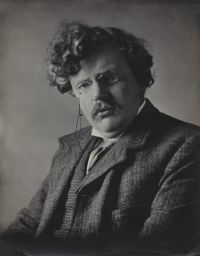
Portrait of Gilbert Keith Chesterton Gilbert Keith Chesterton Appreciations and Criticisms of the Works of Charles Dickens… (1911)

With these wild beings we never bother about the cause of their coming. Such guests in a story may be uninvited, but they are never de trop. They earn their night's lodging in any tale by being so uproariously amusing; like little Tommy Tucker in the legend, they sing for their supper. This is really the marked truth about Our Mutual Friend, as a stage in the singular latter career of Dickens. It is like the leaping up and flaming of a slowly dying fire.
Source: Wikisource

Portrait of Gilbert Keith Chesterton Gilbert Keith Chesterton Appreciations and Criticisms of the Works of Charles Dickens… (1911)

They have that great Dickens quality of being something which is pure farce and yet which is not superficial; an unfathomable farce -- a farce that goes down to the roots of the universe. The highest compliment that can ever be paid to the humour of Dickens is paid when some lady says, with the sudden sincerity of her sex, that it is "too silly." The phrase is really a perfectly sound and acute criticism. Humour does consist in being too silly, in passing the borderland, in breaking through the floor of sense and falling into some starry abyss of nonsense far below our ordinary human life.
Source: Wikisource

Portrait of Gilbert Keith Chesterton Gilbert Keith Chesterton Appreciations and Criticisms of the Works of Charles Dickens… (1911)

How well Dickens distinguishes the ill-bred indifference of Podsnap from the well-bred indifference of Mortimer Lightwood and Eugene Wrayburn. How well he distinguishes the bad manners of the merchant from the equally typical bad manners of the gentleman. Above all, how well he catches the character of the creature who is really the master of all these: the impenetrable male servant. Nowhere in literature is the truth about servants better told.
Source: Wikisource

Get perspective with Kwize: daily news enlightened by great literature