Summary

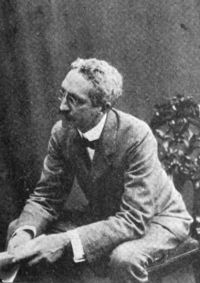
Portrait of Gustav Kobbé Gustav Kobbé The Loves of Great Composers

The love of his Constance was the solace of Mozart's life.
The wonder-child, born in Salzburg in 1756, and taken by his father from court to court, where he and his sister played to admiring audiences, did not, like so many wonder-children, fade from public view, but with manhood fulfilled the promise of his early years and became one of the world's great masters of music. But his genius was not appreciated until too late. The world of to-day sees in Mozart the type of the brilliant, careless Bohemian, whom it loves to associate with art, and long since has taken him to its heart.
Source: Gutenberg

Portrait of Gustav Kobbé Gustav Kobbé The Loves of Great Composers

No woman not a professional musician has ever played so important a part in musical history as "Frau Cosima," the widow of Richard Wagner. In fact, has any woman, professional musician or not? Bear in mind who "Frau Cosima" is. She is the daughter of Franz Liszt, the greatest pianist and one of the great composers of the last century, and was the wife and, in the most exalted meaning of the term, the helpmeet of the greatest of all composers! The two men with whom Cosima has thus stood in such intimate relation are exceptional even among great musicians.
Source: Gutenberg

Portrait of Gustav Kobbé Gustav Kobbé The Loves of Great Composers

For it is a helpmeet, not another genius, that a man of genius really needs most. The woman who, without being prosy or commonplace and without allowing herself to retrograde in looks or in personal care, can run a household in a systematic, orderly fashion is the greatest blessing that Providence can bestow upon genius. Evidently Cécile was just such a woman. Her tact seems to have been as delicate as her beauty. Without, perhaps, having directly inspired any composition of her husband's, her gentleness, her simple grace, doubtless left their mark on many bars of his music.
Source: Gutenberg

Get perspective with Kwize: daily news enlightened by great literature