Summary

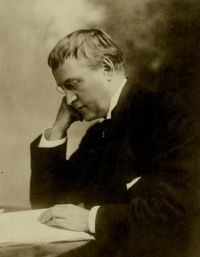
Portrait of Henry T. Finck Henry T. Finck The Mentor: Famous Composers, Vol…

Johannes Brahms is the god of the conservatives. He aimed, half-consciously, to carry on the traditions of Beethoven, and he had no use for modern realism and program music. His symphonies—the most delightful of which is the second—are marked simply numbers one, two, three, and four; and for his piano pieces he has no poetic titles after the manner of Schumann: they make their appeal by their own beauty, unadorned—and they have won a large audience of admirers.
Source: Gutenberg

Portrait of Henry T. Finck Henry T. Finck The Mentor: Famous Composers, Vol…

When Mendelssohn’s parents called him Felix they chose the right name for him; for Felix means happy, and throughout his life few things occurred to cast on him shadows of dark clouds like those which occasioned the gloomy moods of Chopin, Beethoven, Schumann, and Liszt. While Chopin also had his happy moments, a vein of sadness twines through most of his pieces.
Source: Gutenberg

Portrait of Henry T. Finck Henry T. Finck The Mentor: Famous Composers, Vol…

It is significant that of these pieces the one most often heard is the funeral march from one of his sonatas; whereas of Mendelssohn’s pieces the one most in vogue is the jubilant wedding march from his music to “A Midsummer Night’s Dream.” Evidently there dwells in most souls a love of both the sad and the cheerful in art.
There was a time when Mendelssohn’s popularity was second to that of no other composer. His short piano pieces known as “Songs without Words” in particular enjoyed unbounded popularity, thanks to their tunefulness, which all could appreciate.
Source: Gutenberg

Get perspective with Kwize: daily news enlightened by great literature