Summary

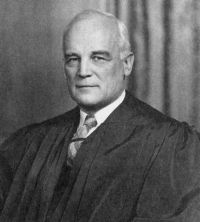
Portrait of Harold Hitz Burton Harold Hitz Burton Libson Shops v. Koehler — Opinion of the Court

The Government contends that the carry-over privilege is not available unless there is a continuity of business enterprise. It argues that the prior year's loss can be offset against the current year's income only to the extent that this income is derived from the operation of substantially the same business which produced the loss. Only to that extent is the same 'taxpayer' involved.
Source: Wikisource

Portrait of Harold Hitz Burton Harold Hitz Burton Libson Shops v. Koehler — Opinion of the Court

In the Newmarket case, supra, a corporation desiring to change the state of its domicile caused the organization of a new corporation and merged into it. The new corporation sought to carry back its post-merger losses to the pre-merger income of the old corporation. But for the merger, the old corporation itself would have been entitled to a carry-back. In the present case, the 16 sales corporations, prior to the merger, chose to file separate income tax returns rather than to pool their income and losses by filing a consolidated return.
Source: Wikisource

Portrait of Harold Hitz Burton Harold Hitz Burton Libson Shops v. Koehler — Opinion of the Court

The availability of this privilege depends on the proper interpretation to be given to the carry-over provisions. We find nothing in those provisions which suggest that they should be construed to give a 'windfall' to a taxpayer who happens to have merged with other corporations. The purpose of these provisions is not to give a merged taxpayer a tax advantage over others who have not merged. We conclude that petitioner is not entitled to a carry-over since the income against which the offset is claimed was not produced by substantially the same businesses which incurred the losses.
Source: Wikisource

Get perspective with Kwize: daily news enlightened by great literature